
Anybody with access to a metal building supplier, a concrete crew, and a decent-looking website can call themselves a barndominium builder these days.
Some of these outfits are excellent builders.
Some just aren’t.
That matters because the difference between a good barndominium builder and a bad one usually doesn’t show up on day one. It shows up later.
- The slab cracks.
- Moisture shows up inside the walls.
- One of your subs didn’t get paid – now you’ve got alein on your property
- The permit never got closed out.
That low quote you got turns into a string of change orders, and you find out (too late) that the builder priced the easy parts and left the risky parts hanging.
That’s why this isn’t really about who has the nicest photos or the slickest website.
It’s about who is thinking ahead.
The lesson here?
If you’re comparing barndominium builders in East Texas, don’t start with pictures.
Start with scope, soils, drainage, engineering, permits, and who’s on the hook when something goes wrong.
If your barndominium builder can’t explain those basic details clearly, you’d better keep looking.
Here’s where to start.
Table of Contents
The 5 Things to Check Before You Hire a Barndominium Builder
Before you compare photos, compare this:
- Site visit: Did your barndo contractor actually walk the property?
- Soil report: Is the foundation based on real geotechnical data?
- Engineered drawings: Are the plans stamped for your project and your site?
- Written scope: Can you see exactly what’s included and what’s not?
- Permit process: Who’s handling permits, inspections, and closeout?
A serious barndominium contractor should be able to answer those in writing.
Not vaguely.
Not “we usually do it this way.”
Not “don’t worry, we’ve got it.”
In writing.
That alone will eliminate a lot of wanna-be contractors fast.
What a Barndominium Builder Actually Is
A barndominium is usually a steel-framed building with finished living space inside. Sometimes it’s all living space. Sometimes it’s part house and part shop. Sometimes it’s a home with storage, workspace, or a garage built into the same envelope.
The structure itself is usually a pre-engineered metal building package. Steel columns. Steel rafters. Purlins. Girts. Metal roof and wall panels.
That part matters. But it’s only one piece of the job.
What separates one builder from another is everything around the shell:
- Site prep
- Drainage
- Foundation design
- Slab details
- Insulation system
- Moisture control
- Interior framing
- Plumbing, electrical, and HVAC
- Finish work
- Engineering and planning before concrete gets poured
That’s where a lot of confusion starts.
Some companies are really metal building suppliers. They sell the package. They may line up erection, too.
Some are steel erectors. They stand the steel up and move on.
Some are general contractors who can coordinate the rest.
A smaller number actually handle the entire process as design-build contractors, from early due diligence through to finished occupancy.
Those are not the same thing.
A company may be very good at selling steel and still not be the right company to manage your site, foundation, drainage, insulation, interior buildout, and finish work.
Another company may be a strong residential builder but have limited experience with how steel systems behave, especially when you’re trying to make the interior perform like a home.
That is why owners get tripped up.
They think they are hiring one thing, but they are actually buying another.
Some barndominium builders handle the full job, from site work to certificate of occupancy. Others deliver a shell and leave the rest to you. Others are somewhere in the middle.
None of that is automatically wrong. But you need to know which one you’re buying.
A shell price and a turnkey price are not the same conversation. A supplier and a builder are not the same thing. A crew that can erect steel is not automatically a crew that can deliver a finished, code-compliant home.
That’s the first thing to get straight.
Why Three Barndominium Builders Quote Three Different Numbers
You can get three quotes and see a spread of $80,000 or more. That doesn’t always mean somebody’s crooked.
Usually, it means they’re pricing different scopes.
Builder A prices the metal building, slab, and erection.
Builder B prices the shell: slab, steel, exterior doors, insulation, maybe a small apron.
Builder C prices the full job, from dirt work to finishes.
Those are not comparable numbers.
If you line them up side by side without a line-item scope, you’re not comparing builders.
You’re comparing apples to a tractor.
This is one of the biggest mistakes owners make. They see a low number and assume it means efficiency. Sometimes it just means omission.
Here’s where the money usually goes on an East Texas barndominium project:
- Site work and pad prep: depends heavily on grade, drainage, clearing, fill, and access
- Foundation/slab: depends on soil conditions and engineering requirements
- Steel shell: depends on span, height, openings, insulation package, and complexity
- Interior finish: depends on layout, MEP, cabinetry, fixtures, flooring, trim, and finish level
- Permits, engineering, and due diligence: often left out of low quotes, but they still have to be paid for
That last category is where a lot of cheap numbers hide.
A builder may say, “We can get you in this for far less,” and on paper, that may look true.
Then you find out soils weren’t included. Drainage wasn’t included. Septic wasn’t included. Engineered drawings weren’t included. Interior framing wasn’t included. Permit closeout wasn’t included. The number was low because the scope was thin.
That’s not the same as being competitive.
Some builders out there may advertise shell pricing that looks attractive at first glance.
Some may even quote lower turnkey numbers than Trinity.
Usually, that comes down to one of three things:
- The finish level is lower,
- The scope is thinner,
- Or the due diligence is missing.
Trinity’s verified residential turnkey range is $200–$260 per square foot, depending on finish level and complexity.
That range is higher for a reason. It reflects real planning, engineering, due diligence, and the work it takes to build responsibly in places where oversight can be inconsistent.
That includes the kind of work many owners never see:
- Checking the soil profile with a geotechnical evaluation before designing the slab
- Creating a drainage plan before the pad gets built
- Coordinating real engineered drawings
- Defining the scope clearly enough that the price you get is the price you pay
- Handling inspections and closeout instead of hoping nobody asks later
That last part matters more in counties where enforcement is lighter. Just because something can slide through doesn’t mean it should.
The point is simple: when a barndominium builder gives you a number, you need to know exactly where that number stops.
What a Good Barndominium Builder Checks Before They Quote
This is where experienced builders separate themselves from the rest.
A good builder doesn’t quote your job from a desk. They visit the site. They look at the grade, access, trees, drainage, and utilities. Then they order the work that tells them what they can’t see.
Soil report.
A geotechnical report tells the builder what is under the pad site: clay content, bearing capacity, water table, fill, and rock. This determines the foundation design. Without it, the slab is a guess. In East Texas, where soil can change fast across one property, skipping this step is reckless.
Drainage plan review.
Water is one of the biggest long-term threats to a slab and building pad. A good builder studies how water moves across the site and makes sure it moves away from the building, not toward it or under it.
Engineered drawings.
Not a sketch. Not a generic plan. A real stamped set designed for your building, your site, and your loading conditions. These drawings guide the permit process, the build, and accountability if something goes wrong later.
Site plan.
Setbacks, easements, utilities, access, floodplain issues, and building placement need to be checked before the pad location gets locked in. Getting that wrong gets expensive fast.
There’s more, too.
A good builder checks whether trucks and equipment can even get where they need to go. A nice homesite on paper may need clearing, culvert work, better access, or a different building location just to make the job practical.
They check utility realities early. Power may be farther away than the owner thinks. Water may need a well. Sewer may not exist. Septic may require more area, a different layout, or a different budget than expected.
They look at pad height and finish floor elevation. On some sites, getting the building high enough to shed water properly changes the amount of fill, the grading plan, driveway tie-ins, and overall cost.
They look at where rainwater is coming from, not just where it sits today. A site that looks dry can still have problems if the surrounding land drains toward it during a storm.
They look at local enforcement, too. In some places, the process is formal. In others, it’s looser. But loose oversight is not a reason to do less homework. It’s the opposite. When the owner doesn’t have strong outside guardrails, the builder needs stronger internal ones.
Builders who skip this work aren’t saving you money. They’re deferring costs to a point in the project where you have no leverage and no good options.
That sentence is the whole issue.
A problem caught before pricing requires careful planning.
A problem caught after the slab is poured is a fight.
Shell vs. Turnkey: Know What You’re Buying
This is where a lot of owners get burned.
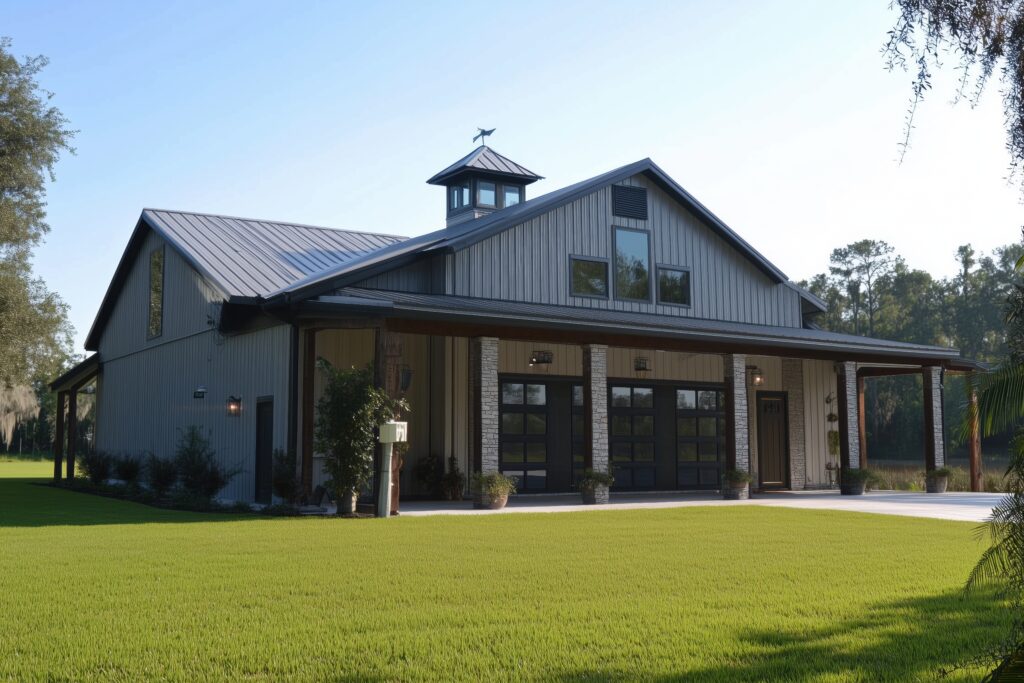
A shell usually means slab, steel frame, wall and roof panels, exterior doors, and sometimes insulation. Inside, it’s still a shell.
A turnkey project is finished and ready for occupancy. That includes foundation, structure, interior framing, MEP, finishes, permits, inspections, and closeout.
Neither model is wrong. But they should explain the tradeoff clearly.
If you go shell-only, you’re usually taking on the interior buildout yourself or managing the subs who do it. That means scheduling trades, coordinating inspections, solving conflicts, ordering materials, and keeping the job moving.
Most people underestimate that burden.
They also underestimate how many decisions are still left.
- Where do the interior walls go?
- How are they framed inside the steel?
- How are plumbing runs handled?
- How do you route wiring cleanly?
- What insulation system are you using?
- How are you handling vapor control?
- What happens when one trade needs something from another trade and neither wants to own it?
That’s where many shell projects stall.
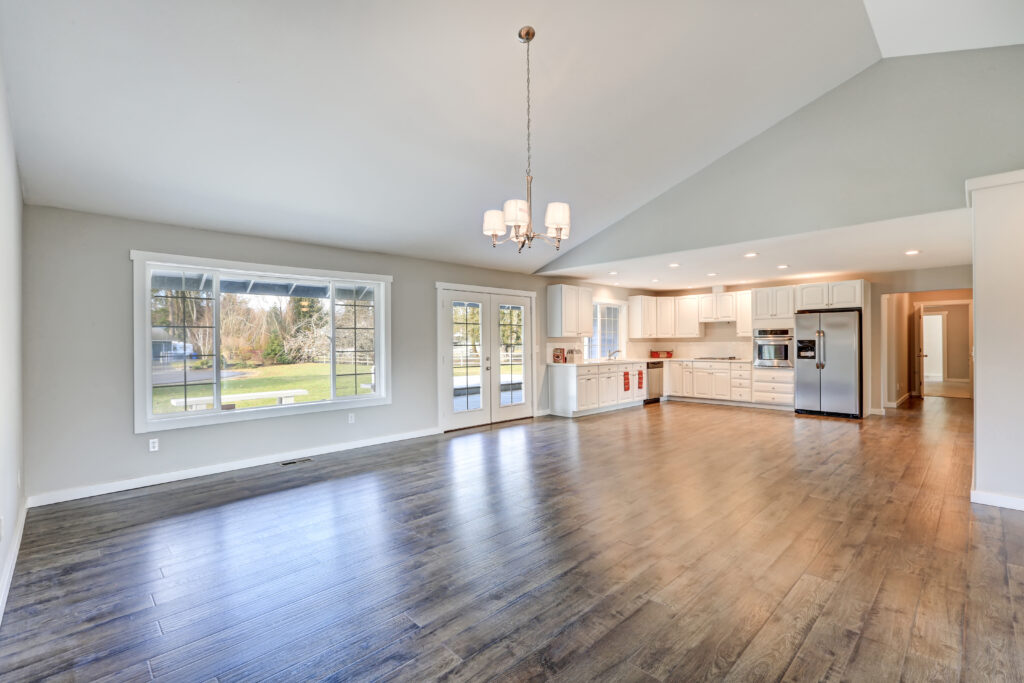
The interior of a barndominium is not inherently simpler than that of a conventional house. In a lot of cases, it’s more complicated because you’re fitting residential systems inside a steel structure.
The condensation issue is where this gets real. If the insulation, vapor control, and ventilation strategy aren’t thought through, moisture problems may not show up until long after the crew is gone. By then the damage is harder to see and more expensive to fix.
That’s why a cheap shell can get expensive fast.
The shell itself may go up quickly. That part is satisfying. The owner sees steel standing and feels like huge progress has been made.
But the interior is where time, money, and coordination pile up. If nobody has really planned that phase, the project drags, costs climb, and frustration sets in.
A good builder explains that before you sign.
Not after the shell is standing.
Before.
Red Flags to Watch for When Hiring Your Barndominium Builder
These are the ones that matter most.
They quote the job before visiting the site.
That’s not a firm price. That’s a guess.
They don’t mention a soil report.
That usually means the foundation is being priced off assumptions.
The contract is vague.
A real contract should spell out scope, exclusions, allowances, and who’s responsible for what.
They can’t explain the engineering.
If they can’t tell you who is designing the structure and foundation, that’s a problem.
They push speed over process.
Fast is fine. Fast without due diligence is how expensive mistakes happen.
They only show photos of steel going up.
Ask for finished, occupied projects. Better yet, go walk one.
They act annoyed when you ask what’s included.
That usually means the number depends on you not asking too many questions.
They use vague language around permits.
“Usually not a problem” is not a real answer.
They have no clear change-order process.
If pricing changes later, you need to know how that gets documented and approved.
They treat drainage like an afterthought.
That mistake lives a long time.
None of these things by itself proves a builder is bad. But taken together, they tell you how the job is likely to feel once the money is committed.
What a Finished Barndominium Actually Costs in East Texas
This is where people get confused fast.
A lot of online pricing is outdated, partial, or missing major scope. That’s why one post says barndominiums cost almost nothing, and a real quote says otherwise.
For Trinity’s market and standards, the better way to frame pricing is this:
Shell pricing can look appealing because it leaves out a lot of what owners still have to pay for later.
Turnkey residential pricing at Trinity typically lands in the $200–$260 per square foot range, depending on finish level, engineering requirements, site conditions, and complexity.
That range reflects more than the shell. It reflects:
- Due diligence up front
- Soils and drainage work
- Engineered drawings
- Defined scope
- Permit coordination
- Inspections
- A level of planning that protects the owner long after move-in
A simpler project with straightforward land, standard finishes, and a clean scope may land on the lower end. A more custom project with harder site conditions, more glass, more complexity, or higher-end finishes will move up.
That doesn’t make the higher number inflated. It usually makes it more complete.
You may find lower numbers in the market. Sometimes those numbers are real for a stripped-down scope. Sometimes they’re just incomplete.
A shell number may be honest as a shell number. The problem is when an owner hears it as a finished-home number.
That is where expectations get wrecked.
A better question than “Who’s cheapest?” is this:
What am I actually getting for this number?
- Does it include the work that keeps the slab from moving wrong?
- Does it include drainage planning?
- Does it include engineering?
- Does it include permit coordination?
- Does it include inspections and closeout?
- Does it include the interior work needed to make the building function as a home?
What matters isn’t whether the number is low. It’s whether it’s honest.
Here’s How to Vet a Barndominium Builder Before You Commit
Ask these questions in this order:
1. What exactly is included in the quote?
Get a written line-item scope.
2. Is a soil report included?
If not, ask how the foundation is being designed.
3. Who is engineering the job?
Get names, not vague answers.
4. Who handles permits and inspections?
Don’t assume the builder is doing it.
5. How do you handle moisture control?
They should be able to explain insulation, vapor control, and ventilation in plain English.
6. What happens when pricing changes?
The change-order process should be clear before the first shovel hits the ground.
7. Can I see a finished project?
Not a rendering. Not a framing photo. A real completed building.
8. What is not included?
This question alone can save you a lot of pain.
9. Who is responsible for closeout?
Permits, finals, punch items, paperwork. Somebody needs to own that.
10. If I choose shell-only, what will I still be responsible for?
Make them spell it out.
A builder who does this work won’t be offended by these questions.
A builder who gets irritated by them is telling you something.
Frequently Asked Questions About Hiring a Barndominium Builder
What’s the difference between barndominium builders and regular home builders?
The biggest difference is the structural system. A conventional home builder is usually working with wood framing. A barndominium builder is working with a steel structure, often a pre-engineered metal building package, and then installing residential systems inside it. A builder who is great at one system is not automatically great at the other.
How long does it take to build a barndominium?
A simple shell can go up fairly fast once the site and slab are ready – 60 to 90 days in many cases. A full turnkey home takes longer because there is much more coordination involved. Site work, concrete, steel delivery, erection, interior framing, MEP rough-in, insulation, drywall, finishes, inspections, and closeout all have to line up. A turn-key project typically takes between 7 and 9 months.
Do barndominium builders need to be licensed in Texas?
Not in Texas. No. There is no Texas state license that says “barndominium builder.” But that doesn’t mean credentials do not matter. Engineers matter. Licensed trades matter. Real experience matters. What you’re really looking for is a builder with the right team, process, and accountability.
Can a barndominium be built on any piece of land?
No. The land has to support the project. That means the site has to work physically, legally, and financially. Soil conditions matter. Drainage matters. Access matters. Utilities matter. Floodplain issues matter. Setbacks and restrictions matter.
A lot of owners fall in love with the land first and assume the building part will sort itself out later. Sometimes it does. Sometimes it gets expensive fast.
Do I really need a soil report?
If you want the foundation designed for the actual site instead of a guess, yes.
That matters even more in East Texas, where soil conditions can vary across a single property. A foundation designed on assumptions may look cheaper on day one. That does not make it safer.
Why do barndominium builder quotes vary so much?
Because they often include different scopes.
One builder may be pricing only the shell. Another may include site work, engineering, permits, and interior finish. Another may be carrying some of those items as vague allowances. Unless the scope is spelled out clearly, the numbers don’t mean much.
What should be included in a real barndominium quote?
At a minimum, the quote should clearly show what is included and what is excluded. It should tell you whether site work is covered, whether engineering is covered, whether the foundation is based on soils, whether insulation is included, whether interior work is included, whether permits are included, and how changes are handled.
If you can’t tell where the number stops, it’s not a real pricing document. It’s a conversation starter.
Are lower online barndominium prices fake?
Not always. They’re often partial quotes and don’t include any sitework or utilities. That’s what makes a shell number so misleading – especially if the reader thinks it covers a finished home. That is why so many people think barndominiums cost one thing and then get hit with a very different real-world number. The issue is not whether the low number is made up. The issue is whether it tells the whole story.
Are barndominiums cheaper than traditional homes?
At the shell stage, they often can be. Once you add full residential finishes, the gap usually narrows. That’s the honest answer.
A finished home still needs kitchens, bathrooms, HVAC, plumbing, electrical, drywall, flooring, trim, insulation, paint, fixtures, and all the coordination that goes with those systems. Steel does not erase those costs. Try our Free Bardnominium Cost Calculator to see how your ideal barndo adds up.
Do barndominiums hold their value?
They can, if they are built well, permitted properly, and finished like real homes.
The bigger issue is not the label. It is the quality of the build. A barndominium with good engineering, proper moisture control, strong finishes, and a clean permit history is a very different asset from one that was thrown together, never fully documented, and leaves questions for the next buyer.
Can I finance a barndominium?
Yes. Absolutely! But the ease of financing depends a lot on how the project is structured, documented, and built. A well-planned, fully engineered, properly permitted home is easier to underwrite than one with loose documentation or a half-finished scope. That is another reason process matters up front. Sloppy planning doesn’t just create construction problems. It can create financing problems, too. Here’s our deep dive into Barndominium Financing for more information.
What’s the biggest mistake owners make?
Choosing the lowest number without understanding what’s missing.
That’s the big one.
The second mistake is assuming a shell project will be easy to finish later. Sometimes it is. Often it isn’t.
The third mistake is believing that because some counties are less strict, the owner should be less careful. That logic is backward. Less outside control means you need better internal discipline, not less.
Should I choose shell-only or turnkey?
That depends on your time, your experience, your tolerance for coordination, and how much risk you want to carry yourself.
If you know construction well, have trusted trades, and want to control the interior yourself, shell-only may be a fit.
If you want one builder responsible for the whole thing and fewer moving parts on your side, turnkey is often the better choice.
The wrong move is choosing shell-only because it sounds cheaper without really understanding what you are taking on.
A good barndominium builder is not just selling a building. They’re taking responsibility for the decisions that shape cost, performance, and risk.
That starts before the first quote.
Trinity Metalworks is a design-build contractor based in Kerens, Texas. We specialize in pre-engineered metal buildings, steel-frame homes, and barndominiums. We do the work that makes the quote real: site review, soils, drainage, engineering, and a defined scope. That’s how you avoid buying a low number that turns into a high-cost mistake.
Get in touch for your Free Consultation.


