
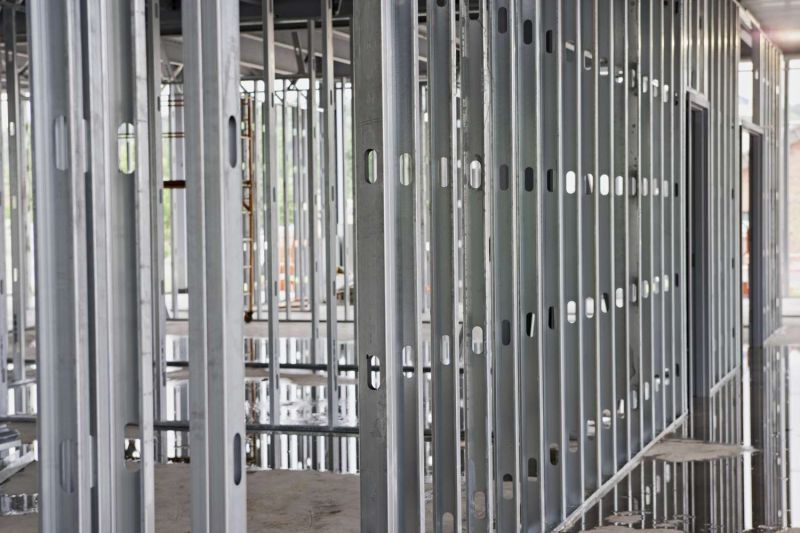
Building just outside the city has real perks. Cheaper land. Fewer permitting headaches. Room to grow. But you don’t always get material guidance out there. So when it comes to framing your flex space, how do you choose well? For a lot of our projects, steel stud framing is the answer. Below, we’ll walk through why steel often beats wood, where wood still fits, and what to weigh before you frame out your tenant spaces.
Table of Contents
A couple weeks ago we were talking through steel versus wood studs with a client. We’re running steel studs on a few jobs right now. Here’s the thinking behind it.
Steel and Wood: How We Actually Build
In our work, we primarily construct with steel, both welded and bolted. That’s the backbone of our metal buildings. But we’ve mixed in wood on plenty of occasions too. Sometimes in the exterior walls. Sometimes interior. Sometimes even the sheathing. Wood has its place, and we’re not dogmatic about it.
That said, steel studs on your interior often make more sense. Once the shell is up, the interior partitions are where steel really earns its keep. Let’s break down why.
Why Steel Stud Framing Speeds Up the Job
One of our main erecting crews is proficient in steel stud framing. That matters more than it sounds. When the same crew that raises the steel can also frame the interior, we move fast. We price efficiently. And we minimize sub coordination. Fewer trades stepping on each other means fewer delays.
On larger jobs, that speed compounds. Every partition wall, every demising line, every office build-out gets handled by a crew that already knows the material. That’s a quiet advantage that doesn’t show up on a spec sheet.
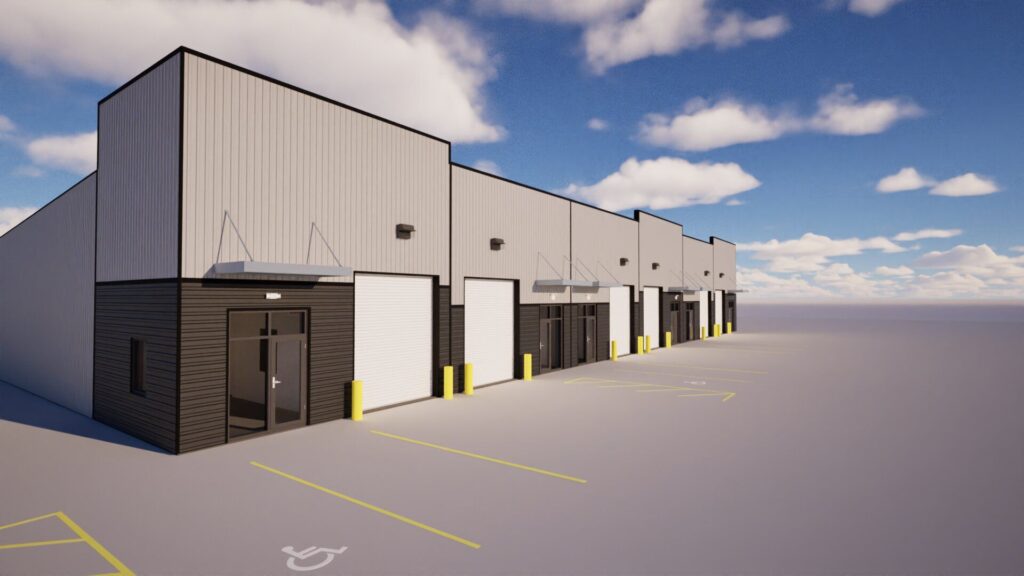
Steel Stud Framing and the Termite Problem
Termites are a real problem in the South. Ask anyone who’s built in Texas. Yes, you can treat for them, both chemically and with steel mesh around pipe fittings in the foundation. But here’s the simple truth: termites don’t eat metal. When you choose steel, you take a whole category of pest damage off the table. The EPA notes that termites cause billions in property damage every year, and much of it goes unnoticed until it’s serious.
Steel Stud Framing and Fire Safety
Let’s be precise here. An isolated steel stud has no “fire rating” on its own. That’s a common misconception. But steel studs are non-combustible. They don’t feed a fire the way dimensional lumber can. In many builds, that’s a real plus, and it can factor into how assemblies get rated. Cold-formed steel is recognized in the International Building Code for exactly these reasons. If fire performance matters to your tenants, steel gives you a stronger starting point.
Steel Stud Framing Means Consistent Quality
Here’s one that trips up a lot of first-time builders. Sifting through #1, #2, and #3 wood studs can leave you with warpage from moisture, mismatched quality, and studs that won’t cooperate. Steel studs come in different gauges, sure. But the quality is uniform. Every stud is straight. Every stud is the same. On a big job, that consistency is gold. It’s one more reason steel shines when you’re building at scale, the kind of scale we handle on our commercial projects.
When Does Wood Still Make Sense?
We’re not here to say wood is bad. It isn’t. On smaller residential-style builds, like some steel frame homes with mixed assemblies, wood can be cost-effective and easy to source. It’s familiar to more crews. And for certain finishes, it’s simply what the design calls for. The point isn’t steel versus wood as a war. It’s about matching the material to the job. For interior partitions in industrial and flex space, steel usually comes out ahead.
What to Weigh Before You Frame Out Your Space
Before you commit, think about a few things. What’s your timeline? Steel stud framing can shave weeks off a large build. What’s your pest exposure? In the South, that’s not a small question. What’s your tenant mix? Offices, warehouses, and small-bay spaces each carry different demands. And what gauge do you need? Heavier gauges carry more load; lighter gauges suit non-structural partitions. If you’re not sure, that’s exactly what we’re here for.
Site conditions matter too. Before any framing goes up, the ground has to be right, something we cover in our guide to metal building site preparation on Texas clay. And if budget is top of mind, our breakdown of a real 40×60 steel building cost in East Texas is a good place to start.
The Bottom Line on Steel Stud Framing
These are just a few thoughts to chew on when you’re demising with steel or framing out offices in your tenant spaces. Steel is fast. Steel is pest-proof. Steel is non-combustible and consistent. For most of the flex and small-bay work we do, steel is the smart default. But every build is different, and the right call depends on your site, your budget, and your goals.
Thinking about your next flex space or industrial build? Reach out for a free plan review, and we’ll help you frame it out the right way.
Need a little help planning your next flex space development? Get in touch with our team today. This consultation is free, and you’ll walk away with actionable insights you can put to work right away.


