
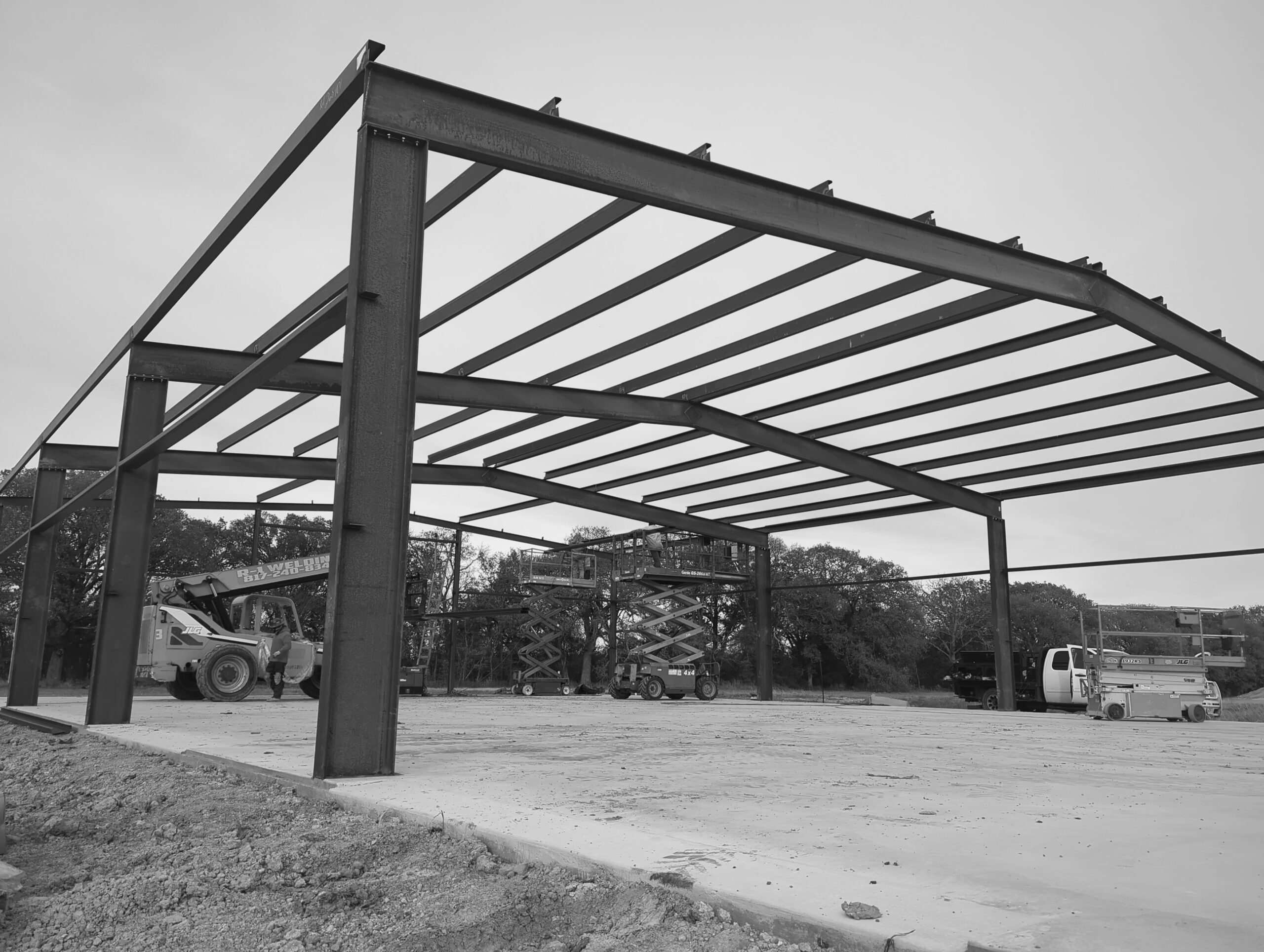
Metal building site preparation starts before the very first piece of steel arrives.
On raw Texas land, the first problem may not be the building, the slab, or the shell package. It may be site access.
You see, Texas clay can look solid when it’s dry. But then the rains hit.
Trucks rut the entrance.
Concrete deliveries get delayed.
Equipment gets stuck.
And that means your flex-space project is already losing precious time before you ever get the frame up.
Here’s how you can avoid all that.
Table of Contents
Why Does Metal Building Site Preparation Start With Access?
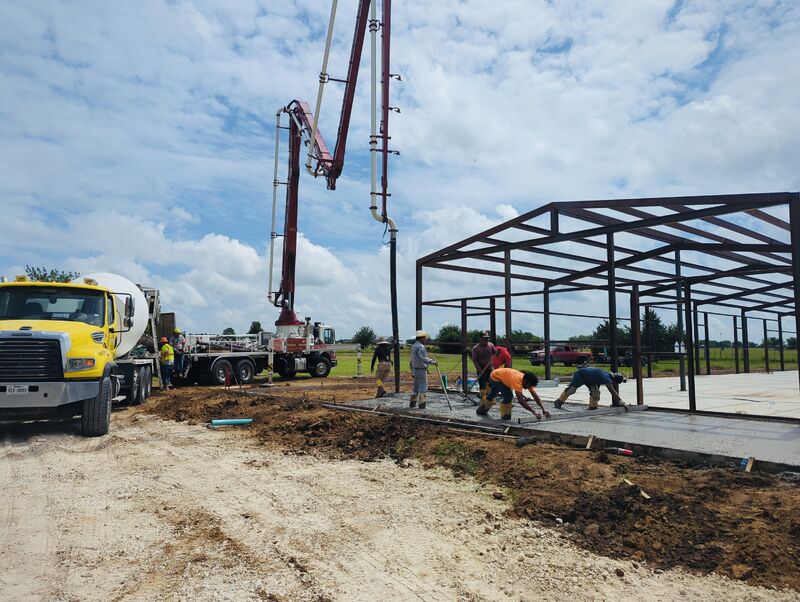
Metal building site preparation starts with access because nothing happens if trucks can’t reach the work.
That sounds obvious.
But it gets missed all the time. Developers often focus on the building first.
They look at:
- Shell Price
- Bay Layout
- Clear Height
- Overhead Doors
- Slab Cost
- Utility Needs
- Lease Rates
- Finished Value
All of that matters.
But none of it helps much if concrete trucks get buried at the entrance. Or if steel delivery trucks cannot reach the laydown area. Or if crews spend half the day fighting mud instead of building.
Site access might not be glamorous. It might not sell the project to tenants. It won’t show well in a site rendering.
But it will protect the schedule before the job starts moving.
That is why we look at access early on every commercial metal building project.
Not after the rain.
Not after the trucks show up.
Not after the site is already torn up.
Early.
Because once wet clay starts getting worked by heavy traffic, the site gets worse fast.
Why Does Texas Clay Cause So Many Site Access Problems?
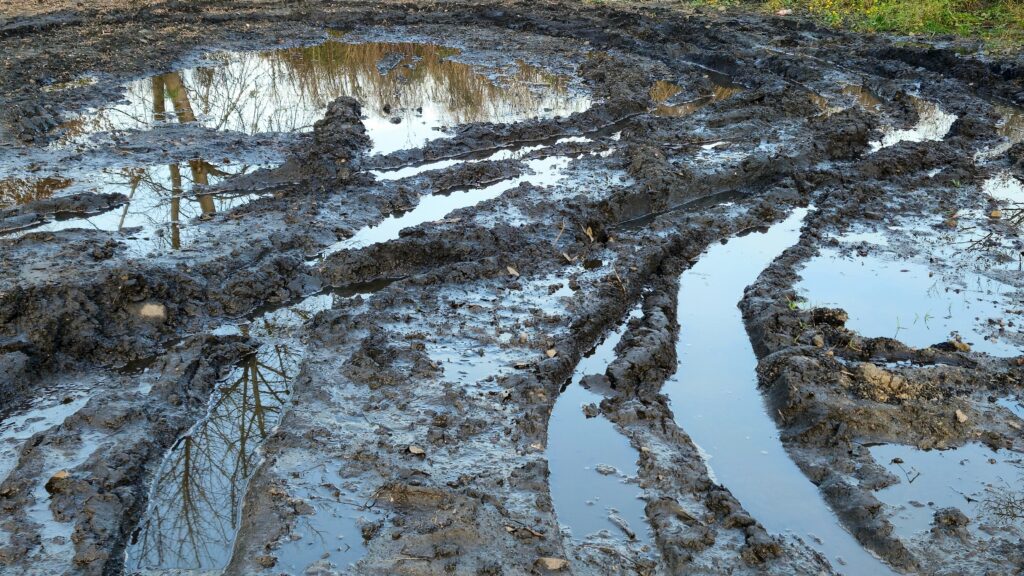
Texas clay causes problems because it can change fast when moisture changes.
When Texas clay it is dry, it may feel hard enough to build on. But when it gets wet, it can swell, soften, rut, and hold water.
That does not mean every site is bad.
It means every site deserves a sober look before construction traffic begins.
A clean field can fool you.
You may walk the site on a dry week and think access is fine. You may even drive across it in a pickup and feel good about it.
But a pickup is not a concrete truck.
A pickup is not a loaded steel delivery.
A pickup is not a telehandler moving material across the site after three days of rain.
That is where the mistake happens.
The land looks ready.
The budget looks clean.
The schedule looks tight.
Then the weather proves who planned well.
The University of Texas Center for Transportation Research has documented how expansive clay causes pavement and building problems in Texas when moisture conditions change.
That same basic risk matters on raw land before heavy construction traffic begins.
What Does Road Base Do During Metal Building Site Preparation?
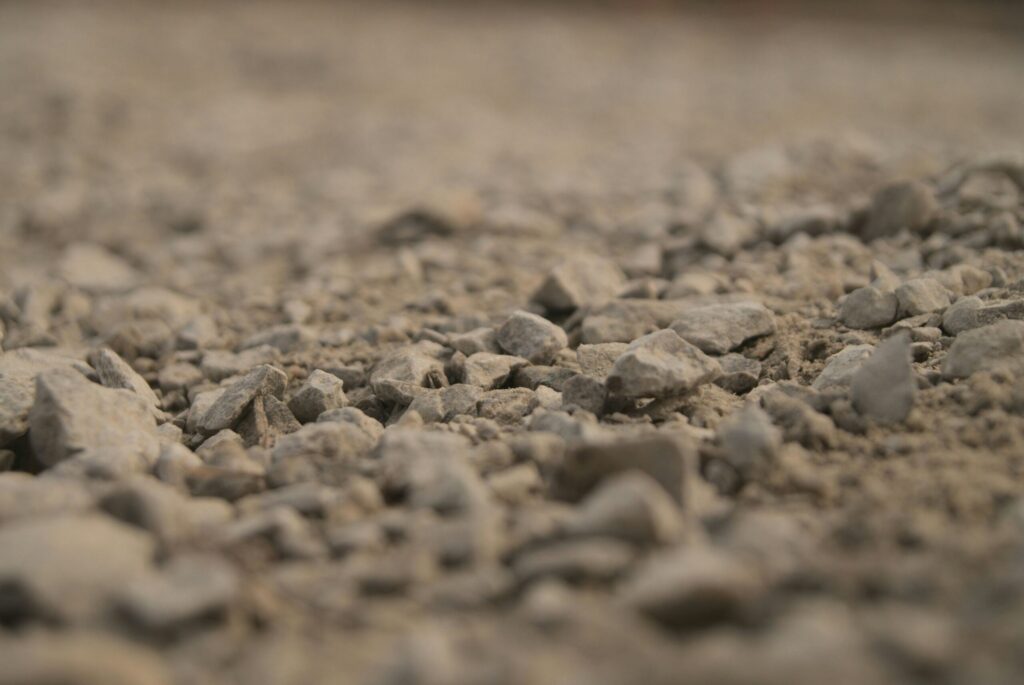
Road base gives the site a working access path before mud controls the job.
Different suppliers use different terms.
You may hear:
- Road Base
- Limestone Base
- Crushed Base
- Flex Base
- Caliche
The names vary by region and gravel pit.
The purpose is more consistent.
Road base helps create a stable path for construction traffic.
It can help crews reach the building pad. It can support deliveries. It can define the laydown area. It can help keep vehicles from spreading all over the site.
It also helps control where the job happens.
That matters.
A messy site gets expensive because movement gets random.
Trucks park where they can. Crews unload where they can. Materials get staged where the ground allows.
Then somebody has to move everything again.
Good metal building site preparation reduces that mess before it starts.
The goal is not just “put down rock.”
The goal is to create a site that can work.
That is a major part of planning pre-engineered metal buildings in East Texas, especially when the project involves raw land.
When Should Road Base Go Down?
Roadbase should go down early enough to support traffic before the site gets soft.
This is the part owners miss.
Road base is not magic.
If you dump it late, directly into mud, you may not solve the problem. You may just spend money burying good material in bad ground.
Road base works best when the route has been thought through.
That means you know:
- Where Trucks Enter
- Where Trucks Turn
- Where Concrete Trucks Stage
- Where Steel Gets Unloaded
- Where Crews Park
- Where Equipment Sits
- Where Water Moves During Rain
On some sites, the access path can later become part of the permanent drive.
On others, it is only a temporary construction route.
Either way, it needs to be planned.
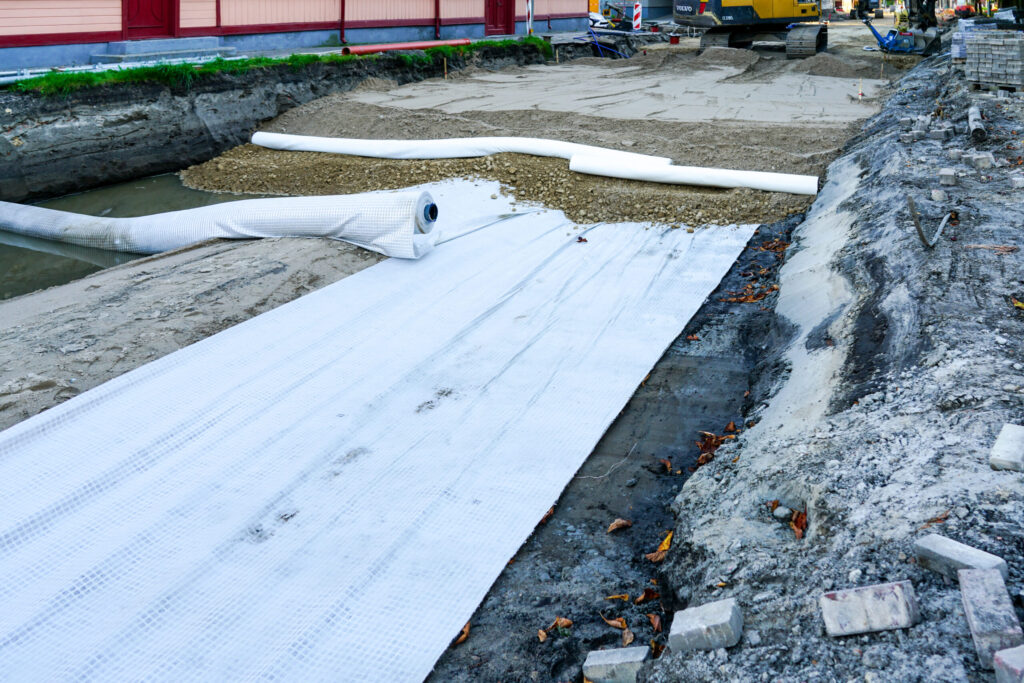
The EPA notes that gravel construction entrances over filter cloth can help reduce rutting and mud tracking off-site.
That is one reason early access planning matters.
Especially on raw Texas land.
Does Metal Building Site Preparation Need Geotextile Fabric?
Metal building site preparation may need geotextile fabric when soft soils can pump up into the base material.
Not every site needs it.
But some sites do.
Geotextile fabric can help separate the rock from the soil below. That matters when wet clay or fine soil wants to move up into the base.
Without separation, the rock can sink.
The clay can pump.
The access path can lose strength.
Then the owner wonders why the road base “didn’t work.”
The problem may not be the rock.
The problem may be the missing separation layer, poor drainage, bad timing, or the wrong section for the soil.
The Federal Highway Administration explains how geotextiles can help separate weak subgrades from base materials.
That same issue can show up on a temporary construction entrance.
This is where experience matters.
A cheap access path can get expensive fast.
How Does Drainage Affect Metal Building Site Preparation?
Drainage affects metal building site preparation because water decides how long the site stays usable after rain.
Road base helps.
But road base is not a drainage plan.
If water runs across the entrance, sits in the drive path, or collects near the building pad, the problem keeps coming back.
Good site access needs to work with drainage.
That may include:
- Crowning The Access Path
- Cutting Shallow Ditches
- Adding Culverts
- Avoiding Low Areas
- Routing Runoff Away From The Drive
- Protecting The Building Pad
- Keeping Laydown Areas High And Usable
The best access route is not always the shortest route.
Sometimes the shortest route crosses the worst ground.
Sometimes the cleanest entrance creates a drainage problem.
Sometimes the obvious drive location does not work once trucks, turning radius, utilities, and fire access come into play.
That is why site access belongs in the planning stage.
Not as a last-minute field fix.
What Should Flex-Space Developers Check Before Buying Raw Land?
Flex-space developers should check access, drainage, soils, utilities, and staging before they trust the building budget.
A shell price is not a project budget.
That is the hard truth.
The steel package may be clean.
The slab number may look reasonable.
The rendering may make the project feel real.
But the land still has to work.
Before buying or finalizing a site, developers should ask:
- Where Is The Best Construction Entrance?
- Will That Entrance Also Serve The Finished Project?
- Can Trucks Enter Without Blocking Traffic?
- Can Concrete Trucks Reach The Pour?
- Can Steel Delivery Trucks Turn Around?
- Where Will The Steel Package Be Staged?
- Where Will Crews Park?
- Where Will Water Go After Rain?
- Does The Site Need A Culvert?
- Does The Access Path Cross Soft Ground?
- Will The Drive Need Fabric Under The Base?
- Is The Laydown Area Near The Building Pad?
- Can Emergency Vehicles Reach The Building Later?
- Will Utilities Conflict With The Access Route?
These questions are not paperwork.
They are project control.
For small-bay industrial and flex-space work, time matters. A delayed shell can push back tenant improvements, leasing, move-ins, and revenue.
That is why metal building site preparation belongs in feasibility.
It is also why developers planning small-bay industrial metal buildings need to think beyond the shell price.
Why Does Metal Building Site Preparation Affect The Budget?
Metal building site preparation affects the budget because poor access creates hidden costs.
The costs do not always show up as one clean line item.
They show up as:
- Towing Charges
- Delayed Concrete Pours
- Extra Equipment Time
- Rework
- Cleanup
- Damaged Base
- Stuck Trucks
- Rescheduled Crews
- Added Material Handling
- Longer General Conditions
- Lost Schedule Days
A weak access plan also creates stress.
Owners get frustrated.
Crews get frustrated.
Suppliers lose confidence in the site.
The builder spends time solving avoidable problems instead of building.
That is the cost nobody likes to count.
But it is real.
A project does not need to be mismanaged to lose money.
It only needs a few early assumptions to be wrong.
Site access is one of those assumptions.
What Should Be Included In Commercial Metal Building Site Preparation?
Commercial metal building site preparation should include access, drainage, staging, utility planning, foundation planning, and soil awareness.
That does not mean every project needs a full civil engineering package before anyone can talk about budget.
It does mean the early budget should carry real site assumptions.
For a flex-space or commercial metal building project, early planning should consider:
Construction Access
How crews, trucks, and equipment reach the work.
Permanent Access
How tenants, customers, delivery trucks, and emergency vehicles reach the finished building.
Drainage
How water moves through the site before, during, and after construction.
Laydown Area
Where steel, insulation, doors, and other materials will be staged.
Building Pad
Where the structure sits, how the slab is supported, and how water moves around it.
Utilities
Where power, water, sewer, septic, gas, and data lines may need to run.
Soil Conditions
Whether the site needs a geotech report, engineered foundation design, or added stabilization.
This is why the cheapest early number is not always the best number.
A number without site planning is not certainty.
It is a guess with formatting.
That applies to larger commercial buildings.
It also applies to smaller projects, including a 40×60 steel building in Texas.
How Does Trinity Approach Metal Building Site Preparation?
Trinity approaches metal building site preparation as part of the whole project, not as a loose item after the shell is priced.
That matters because commercial metal building projects have too many moving parts to treat the structure in isolation.
The building is one piece.
The site is another.
The slab is another.
The access, drainage, utilities, staging, and finished use all have to work together.
That’s where developers can get hurt.
They think they are comparing two building prices.
But one builder may be pricing a shell.
Another may be thinking through the project.
Those are not the same thing.
At Trinity, the point is not to make the project more complicated.
The point is to find the problems early, while they are still cheaper to solve.
Because once trucks are stuck, concrete is delayed, and steel is waiting, the site is already teaching the lesson the hard way.
Better to learn it on paper.
Better still, learn it before buying the land.
FAQs About Metal Building Site Preparation
What Is Metal Building Site Preparation?
Metal building site preparation is the work needed to make raw land ready for construction. It can include access planning, clearing, grading, drainage, soil review, road base, laydown areas, utility planning, and foundation preparation.
Why Does Site Access Matter So Much?
Site access matters because crews and trucks need a reliable way to reach the work. If access fails after rain, the project can lose time before the building starts going up.
Does Every Metal Building Site Need Road Base?
Not every site needs the same road base section, but most raw land projects need some kind of planned construction access. On Texas clay, that access should be discussed early.
Is Caliche The Same As Road Base?
Caliche can be used as road base in some areas, but the terms are not always the same. Suppliers use different names for local materials. What matters is whether the material fits the site, traffic, and soil conditions.
When Should Road Base Be Installed?
Road base should usually be installed before heavy site traffic begins. Waiting until the site is already muddy can make the fix more expensive and less effective.
Can Road Base Be Placed Directly Over Mud?
Sometimes people do it that way, but it is usually not the right plan. Wet, soft ground can swallow good material. Some sites need drying, grading, fabric, thicker base, or a different access route.
Does Texas Clay Always Require Geotextile Fabric?
No. Texas clay does not always require fabric. But fabric may help when soft soil can mix with the base material or when rutting is likely.
How Does Drainage Affect Site Access?
Drainage affects how long the site stays usable after rain. If water crosses or sits on the access path, road base alone may not solve the problem.
Should Site Access Be Reviewed Before Buying Land?
Yes, especially for flex-space, small-bay industrial, and commercial metal building projects. Access can affect budget, schedule, layout, utility routes, and finished site function.
Is A Steel Package Price Enough For Early Budgeting?
No. A steel package price is only one part of the project. Developers also need to understand site work, access, drainage, foundations, utilities, insulation, doors, finish-out, and permitting.
How Does Poor Site Preparation Affect A Flex-Space Project?
Poor site preparation can delay construction and push back tenant delivery. That can affect lease-up, cash flow, lender confidence, and owner stress.
What Should A Developer Bring To Trinity Before Pricing A Project?
Bring the site address, survey if available, intended use, rough building size, bay layout, access points, and any known utility or drainage information. That gives the team a better starting point.
Developers can also contact Trinity Metalworks to review a potential site before the project gets too far down the road.
Planning A Commercial Metal Building Or Flex-Space Project?
Do yourself a favor
Don’t start with only the shell price.
Start with the land.
Then, get in touch with us.
Trinity Metalworks helps developers, landowners, and business owners think through the real project before construction starts.
That includes access, drainage, site planning, foundations, steel, and how the finished building needs to work.
Bring us the land. We’ll help you understand what it takes to build on it.


