
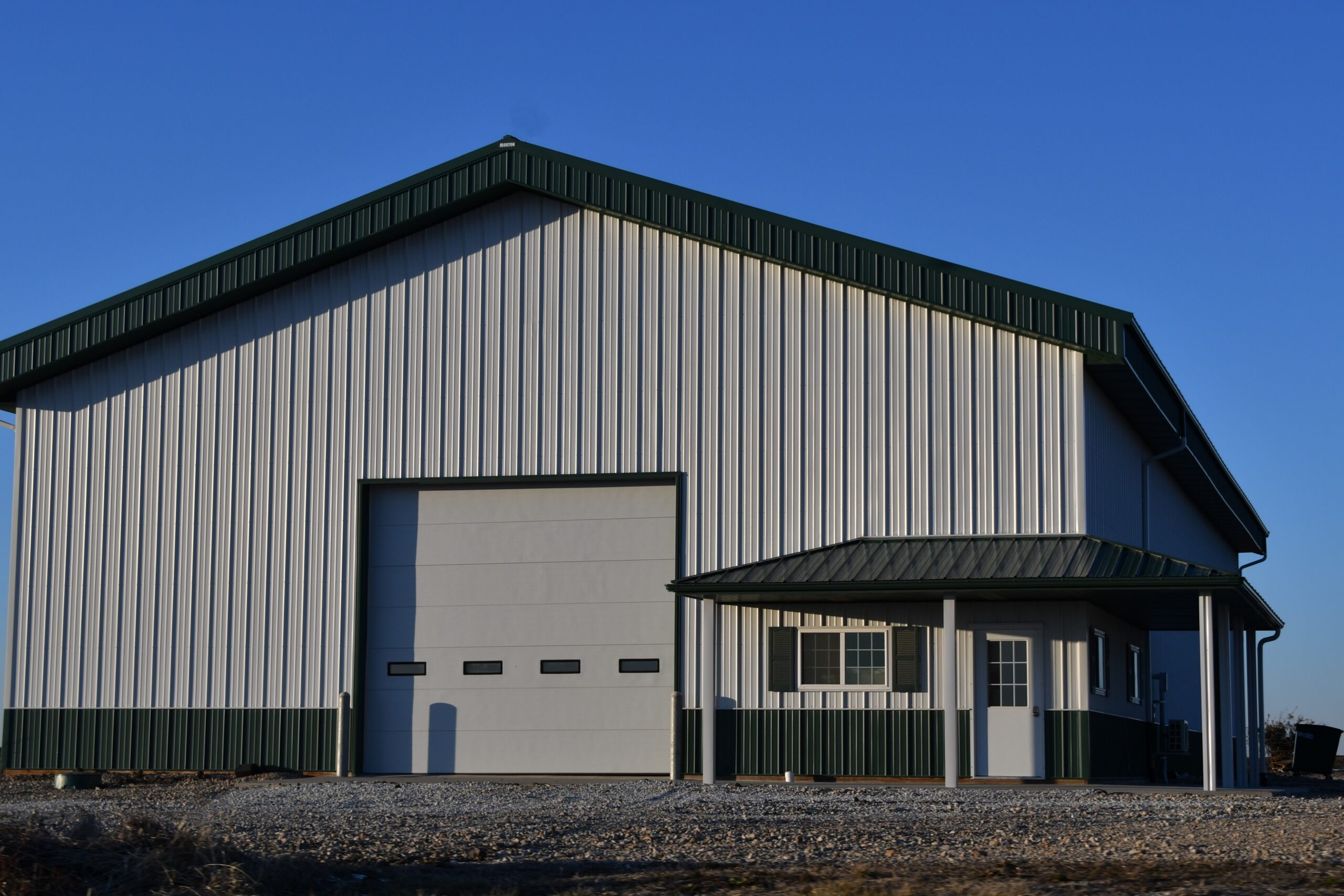
Search “40×60 steel building,” and you’ll find pages of kit suppliers. Clean photos. Fast turnaround. Prices that look reasonable.
What you won’t find is what happens after the truck leaves.
That gap is what this page is about.
We build these 40×60 steel buildings every month right here in Kerens, Texas. As a design-build contractor, we see the full picture.
- Site work.
- Foundation.
- Utilities.
- Finishes.
We know the kit is just the start.
So, we’re breaking down what a 40×60 steel building actually delivers, what it leaves out, and what the real project costs in East Texas.
We talk soil, wind loads, permits, and upgrades that turn a basic shell into a building that works hard for years.
If you are shopping for a 40×60 steel building, read this first.
It’ll save you time, money, and a ton of Texas-sized headaches.
Table of Contents
Why is the 40×60 Steel Building So Popular in Texas?
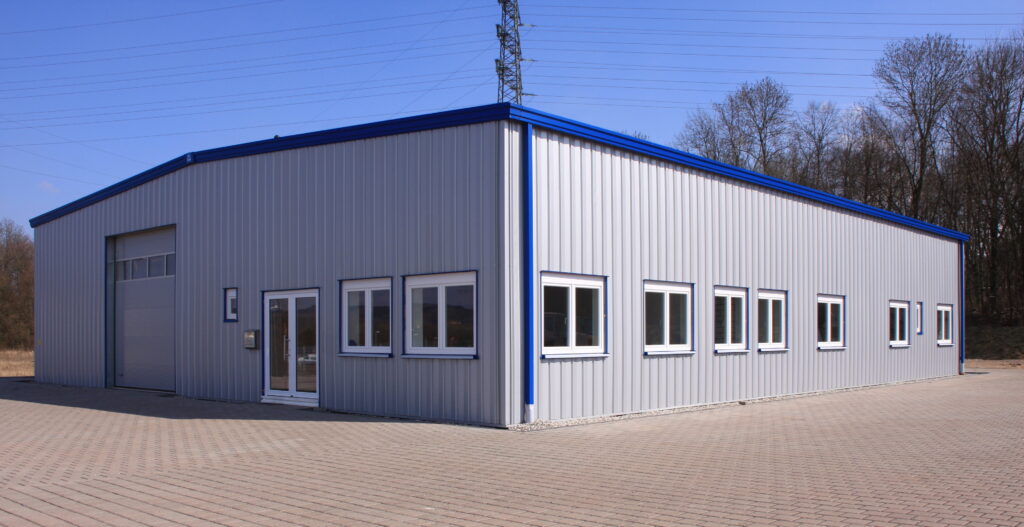
A 40×60 steel building hits the sweet spot. Big enough for real work. Small enough to finance without stress.
You get 2,400 square feet of open space with good eave height and a roof engineered for Texas winds.
East Texas buyers love it for
- Workshop or equipment storage
- Farm and ranch utility buildings
- Contractor shops with staging space and vehicle storage
- Small commercial operations, like e-commerce
- Flex space you can grow into or subdivide later
The erection process is faster than traditional construction. A qualified crew can have the frame standing in three to seven days.
That speed translates directly to lower labor costs and shorter financing exposure.
The clear span lets you park trucks inside, store hay, or set up a small office without columns in the way.
We see 40×60 steel buildings go up fast when the plan is solid.
They stay affordable. They adapt later.
That combination makes the 40×60 steel building a top choice around Kerens, Tyler, Athens, and Corsicana.
You get real usable space without jumping into a massive footprint. Good eave height. A roof built for Texas winds. It fits shops, storage, contractor yards, and ranch work perfectly.
Buyers around Tyler, Athens, Corsicana, and Waxahachie tell us the same thing. A solid 40×60 is big enough to matter and small enough to finance without losing sleep at night.
What Does a 40×60 Steel Building Kit Include?
Most kit suppliers list what you get. Few explain what it means.
Here’s the straight version.
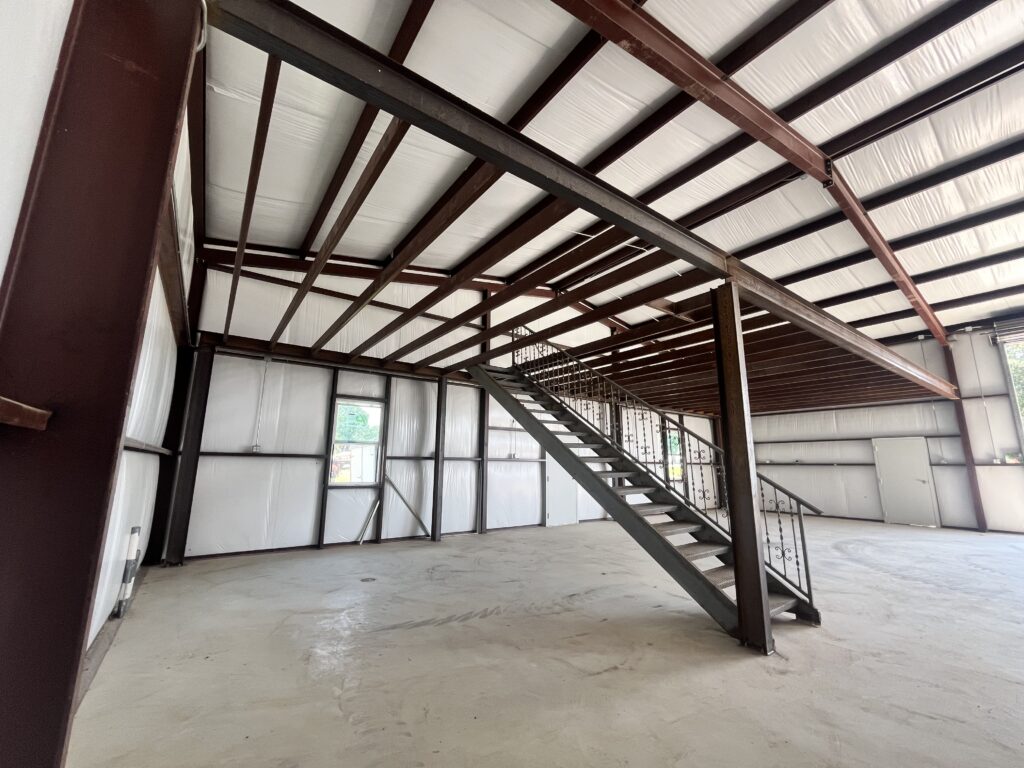
Primary steel frame
This is the skeleton. Columns and rafters, welded or bolted together on site.
On a quality kit, this is red iron — structural I-beam steel, not light-gauge tubing. The frame is engineered to your county’s wind and snow load requirements. This is the part that keeps the building standing for forty years.
Secondary framing
Purlins and girts.
Purlins run horizontally across the roof rafters. Girts run horizontally across the wall columns. Both support the roof and wall panels. Both are included in a standard kit.
Roof and wall panels
Corrugated or standing seam steel panels, cut to length at the factory.
These make up the exterior skin — roof and walls. They come in standard colors. They keep the weather out. They do not insulate, and they do not stop condensation on their own.
Trim and accessories
Corner trim, ridge cap, eave trim, base trim, and closure strips. The pieces that seal the edges and give the building a finished exterior appearance.
Fasteners and sealants
Self-drilling screws, washers, and butyl tape. What holds the panels to the frame and seals the laps between panels.
Anchor bolt plan
A drawing that shows where the anchor bolts need to be set in your concrete foundation before erection begins. This is not a foundation design. It tells you bolt locations.
What goes under those bolts is a separate engineering question.
Erection manual
Step-by-step assembly instructions. Written for someone who has done this before, or is willing to read carefully and work methodically.
What a standard kit does not include:
- Foundation design or concrete
- Site work or grading
- Erection labor
- Insulation of any kind
- Doors and windows (on most kits — some include basic walk doors)
- Electrical, plumbing, or mechanical systems
- Interior framing or finish work
- Permits or engineering stamps
Some suppliers offer add-on packages for insulation, doors, and windows. Those are upgrades, not standard inclusions.
Read the quote line by line before you assume.
A good kit is solid steel and sound engineering. But it is only the starting line.
When the flatbed shows up you receive the frame, panels, trim, fasteners, and an anchor bolt plan. Nothing more.
The rest of the job—site work, concrete, labor, utilities—lands on you or your contractor.
That gap surprises most folks.
And Here’s Another Thing the Kit Leaves Out
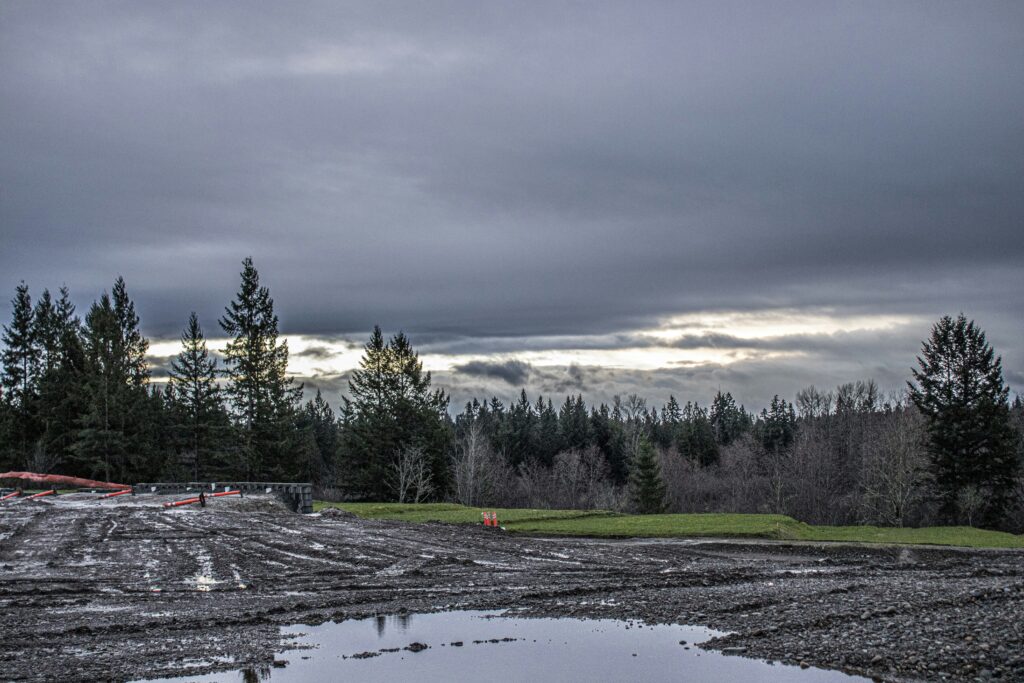
East Texas land throws a wicked curveball.
- Clay soil.
- Rolling hills.
- Heavy spring rains.
Those factors turn a simple order into a real project.
You still need clearing, grading, drainage, foundation engineering, and slab design.
Skip any of those, and problems show up fast—cracks, uneven floor, water inside, high repair bills. We’ve fixed plenty of those issues on job sites in Navarro and Henderson counties.
Will a Steel Building Kit Work for Me?
Not every 40×60 steel building project needs a design-build contractor. Some buyers have a flat, accessible site, simple utility demands, and a straightforward use in mind. Some already have people they trust for site work and concrete. Some have managed similar projects before.
In those cases, a kit may be exactly right.
A kit tends to work well when:
- The site is simple
- The building’s use is basic
- The interior will stay mostly open
- The utility needs are limited
- The owner is comfortable coordinating multiple moving parts on their own
Nothing wrong with that route.
The problem is that many buyers assume their project is simple when it’s only simple on the surface.
One small decision changes everything.
A restroom. A conditioned office. A mezzanine. Any of those shifts the project from a shell into a building with systems, and systems require planning that starts before the kit is ordered.
What Does a 40×60 Steel Building Actually Cost to Build in East Texas?
The kit price is easy to find. The real number is not.
Here is a realistic breakdown for a completed project on typical East Texas land (2026 pricing):
| Item | Estimated Range |
|---|---|
| Pre-Engineered Steel building kit | $24,000 – $45,000 |
| Site clearing and grading | $5,000 – $20,000 |
| Foundation (monolithic slab) | $18,000 – $35,000 |
| Erection labor | $10,000 – $20,000 |
| Insulation | $8,000 – $18,000 |
| Electrical rough-in and panel | $6,000 – $15,000 |
| Doors, windows, walk doors | $3,000 – $10,000 |
| Permitting and engineering | $2,500 – $7,500 |
| Total project estimate | $75,000 – $170,000+ |
These figures are approximate.
The range is wide because East Texas land varies that much. A cleared, level lot in Ellis County with road access is a fundamentally different project than a wooded parcel with a grade in Cherokee County.
Site work drives the spread more than any other line item.
Most online prices quote the shell package, not the finished project. That gap creates a false sense of how close you are to a final number.
The better question isn’t “What does a 40×60 steel building cost?”
It’s “What will this building cost on my land, for my use, with my specific upgrades?”
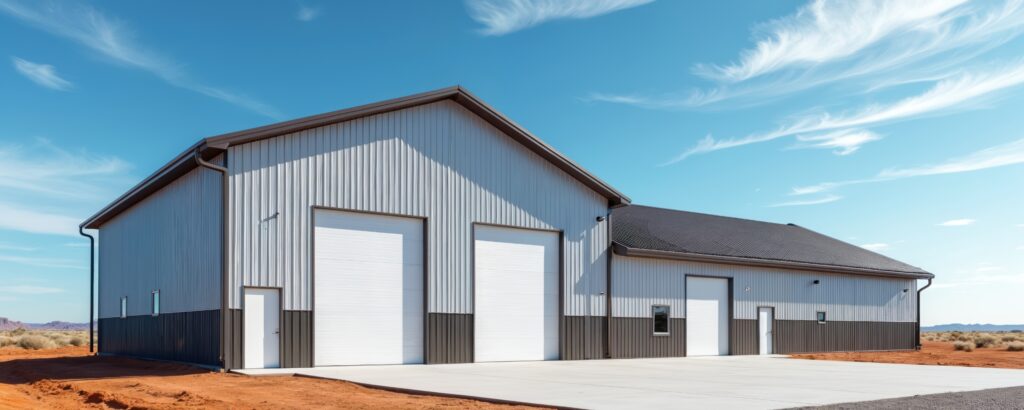
Same footprint. Very different projects.
Joseph Muench, our estimator, can walk through a real number for your specific site—not a national average, not a ballpark. An East Texas number based on current subcontractor pricing.
Site conditions drive the spread more than anything. A flat lot in Ellis County costs far less than a wooded slope in Cherokee County.
Most online prices quote only the shell. That gap creates a false sense of how close you are to a final number.
How Does a 40×60 Steel Building Compare to Other Popular Options?
- 30×40 steel buildings give you 1,200 square feet of usable space—great for a small garage or basic storage, but too tight for most shops.
- A 40×80 doubles the length and adds real room for multiple bays or future expansion.
- 50×100 steel buildings jump to 5,000 square feet and feel like a full commercial space.
The 40×60 sweet spot sits right in the middle. Enough space to work without the budget or timeline of something larger.
How Do I Customize a 40×60 Steel Building?
The 40×60 kit delivers a shell. But most buyers have something more specific in mind.
Here are some of the more popular options you may want to consider.
Vestibule entry.
A framed vestibule adds weather protection and a sense of presence.
It changes the face of the building and creates an air buffer for conditioned interior space.
Mezzanine.
The 40×60 footprint accommodates a partial second-level well.
Office above, shop below. Storage loft. Break room. The structure requires engineering.
Plan it before the kit ships, not after the building is up.
Integrated office.
A framed office section with sheetrock, HVAC, and a dedicated electrical panel turns a steel building into a working commercial property.
Thirty feet of shop and ten feet of office is a common split. Some buyers go half and half.
Insulation system.
Spray foam on the roof deck is the right call for conditioned space. It seals air infiltration and kills condensation. Blanket insulation works for unconditioned storage.
The insulation decision has decades of utility cost implications.
Conditioned air.
A mini-split handles a small office. A full working shop with people in it needs a properly sized system.
Start with a Manual J load calculation, not a guess.
Three-phase power.
Running welding equipment, large compressors, or commercial machinery? Talk to your electrician before you finalize the site plan. The electrical service will dictate what you can and can’t do in your new building.
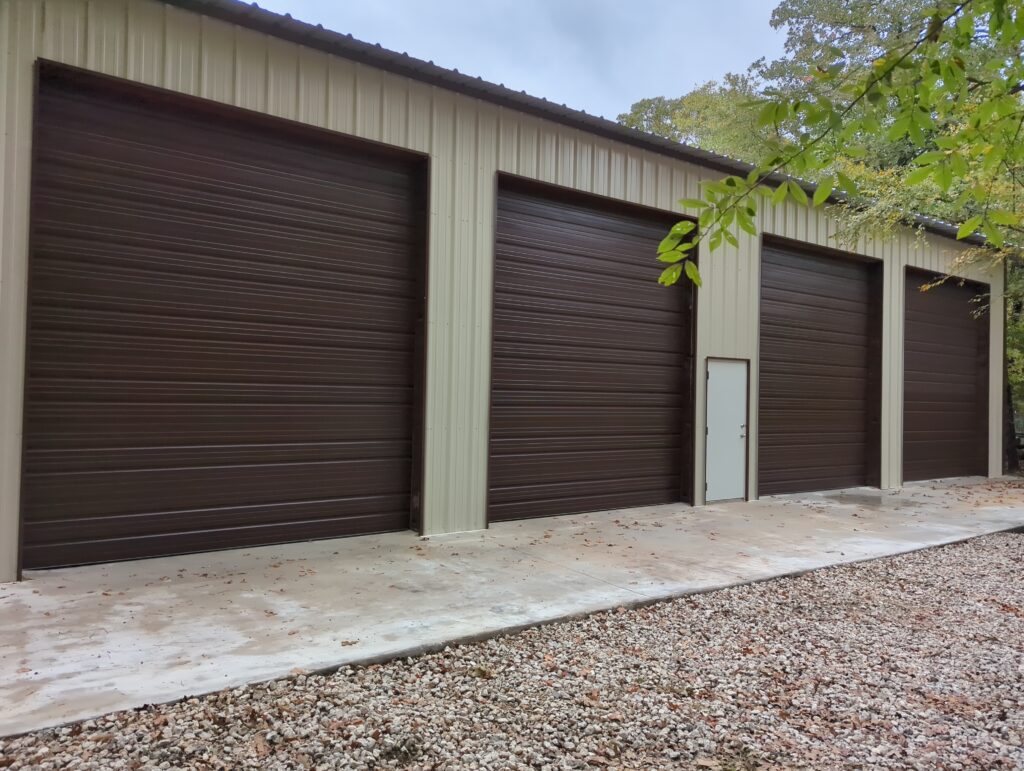
Concrete apron.
The last thing most people think about and the first thing that gets used every single day.
Finish the building and finish the approach.
Site Considerations for East Texas
East Texas is not flat prairie. The terrain, soil, and weather create specific project conditions that matter.
Clay soil.
East Texas has significant clay content across most of the region. Clay expands and contracts with moisture cycles. A foundation that doesn’t account for that movement will crack. Post-tension slab design or properly engineered footings address it. A soil test is the right starting point — not an assumption.
Wind loads.
East Texas falls within Texas wind zones that affect how your kit is engineered. Most reputable suppliers account for this when you give them your county. Verify it before you sign anything.
Drainage.
Low-lying areas, seasonal creek behavior, and heavy rain events are normal here. A 40×60 steel building sitting in a drainage path will flood. Grade your site to push water away from the building before you pour anything.
TDLR.
If your building will be a commercial structure with public access — a contractor shop, a small business, or any non-residential use — it may be subject to the Texas Department of Licensing and Regulation’s requirements.
You’d better know that before you pull permits.
What to Figure Out Before You Order
These questions don’t slow the project down. They keep it from getting sideways.
- What will this building actually be used for? Storage, workshop, office, ranch use, contractor shop, or a combination? The use drives every other decision.
- What does the site need before the steel arrives? Clearing, grading, drainage, culverts, utility trenching, driveway work? A site visit answers this. An assumption doesn’t.
- What kind of foundation makes sense here? That depends on your soil, your loads, and your building use — not on what’s cheapest.
- Will the building need water, septic, or heavy power? If yes, those systems need to be in the plan before the slab is poured.
- Will you want insulation, HVAC, or office space? Those decisions change both the layout and the budget. They also affect the kit spec. Make them before you order.
- Who is coordinating the whole project? Someone has to own the sequence. If it’s you, go in with eyes open. If it’s not, find that person before you pour concrete.
How Trinity Metalworks Fits In
We don’t sell kits. Worth saying plainly.
If you’re ordering a 40×60 steel building kit online and managing the project yourself, we’re not your supplier. There are good kit suppliers. Use one.
What we do is manage everything the kit doesn’t cover.
- Site work,
- Foundation engineering,
- Utility coordination,
- Permitting,
- Custom modifications
- Construction management from groundbreak to certificate of occupancy.
- Total Customer Satisfaction
That #7 is a big one. We’ll be with you from day one through final touch-up. No customer service menu to wade through, no waiting for a callback, high touch, high care, customer service. That’s what you get with a trusted builder at your side.
We also work with buyers who want something the standard kit can’t deliver.
If the 40×60 footprint is right but you need a vestibule, mezzanine, integrated office, or a fully conditioned shop — that’s a custom steel-frame project. That’s what we build.
Trinity uses a five-phase Integrated Project Delivery process. Before we break ground, you have a complete scope of work, real bids from East Texas subcontractors, and a locked budget.
No surprises.
No change orders for things we should have caught in planning.
We work across East Texas and the Waco-to-DFW corridor. Smith, Henderson, Navarro, Ellis, Van Zandt, Anderson, Freestone, Cherokee, and McLennan counties. Tyler, Athens, Corsicana, Waxahachie, Longview, and the surrounding communities.
If you’re in the planning stages, reach out. The first conversation is free, and we’ll give you straight answers to your toughest questions.
How Long Does It Take to Build a 40×60 Steel Building in East Texas?
The honest answer is 10 to 20 weeks from groundbreaking to the certificate of occupancy.
Where your project lands in that range depends almost entirely on how much planning happened before anyone touched the site.
Here’s how a well-managed project actually moves.
Before Week 1: The Work That Determines Everything Else
Most timeline problems are created before the project officially starts.
The decisions made in the weeks before groundbreaking — soil testing, permit applications, kit ordering, subcontractor scheduling — set the pace for everything that follows. A project that skips this stage doesn’t start faster. It stalls later, at a higher cost.
Soil test. If you’re in East Texas, assume clay soil until a test tells you otherwise. The test takes a week or two to complete, and the results dictate your foundation design. Ordering a foundation without one is a bet most experienced contractors won’t take.
Permit application. Most East Texas counties require a permit for a structure this size. Some require engineered drawings before they’ll accept the application. Processing times vary by jurisdiction — two weeks in some counties, six or more in others. Apply before you order the kit.
Kit lead time. A 40×60 steel building kit typically ships four to eight weeks after the order is placed, depending on the supplier and current demand. The kit needs to arrive after the foundation has cured. Sequence backward from when you want to be in the building.
Subcontractor scheduling. Concrete crews, electricians, and plumbers in East Texas are busy. The good ones are booked out. Line up your trades before you need them, not the week before they’re supposed to show up.
Weeks 1–2: Site Clearing and Preparation
The site has to be ready before foundation work begins. What that involves depends entirely on what the site looks like.
A cleared, level lot with road access and no drainage concerns can be ready in a few days. A wooded parcel with a grade, wet areas, or an unimproved driveway might take the full two weeks or longer.
Site work typically includes clearing and grubbing, rough grading, pad preparation, culvert installation if needed, and rough trenching for any underground utilities — water, power, septic — that need to be stubbed in before the slab is poured.
This is the stage most buyers underestimate in both time and cost. It’s also the stage where bad assumptions get expensive. A site that looks simple from the road has surprised more than a few people once the equipment showed up.
Weeks 3–6: Foundation
The foundation is the most consequential part of the build. It’s also the part you see the least once the building is standing.
For a standard 40×60 monolithic slab, the work breaks down roughly like this:
Layout and formwork take two to three days. Rebar installation takes another two to three days depending on the schedule and crew size. The pour itself is a single day. Then the slab cures.
Concrete needs a minimum of seven days before it’s safe to load. Most experienced contractors wait longer — twenty-eight days is full strength. In practice, erection typically begins around week five or six, allowing for adequate cure time and any scheduling adjustments.
East Texas clay soil often requires post-tension slab design, which adds upfront engineering time but produces a foundation that handles soil movement effectively.
If your soil test reveals expansive clay, don’t negotiate around the engineering. Fix it in the foundation.
Any underground rough-ins — floor drains, plumbing sleeves, conduit stubs — must be set before the slab is poured. There is no fixing this after the concrete is down.
Week 7: Steel Erection
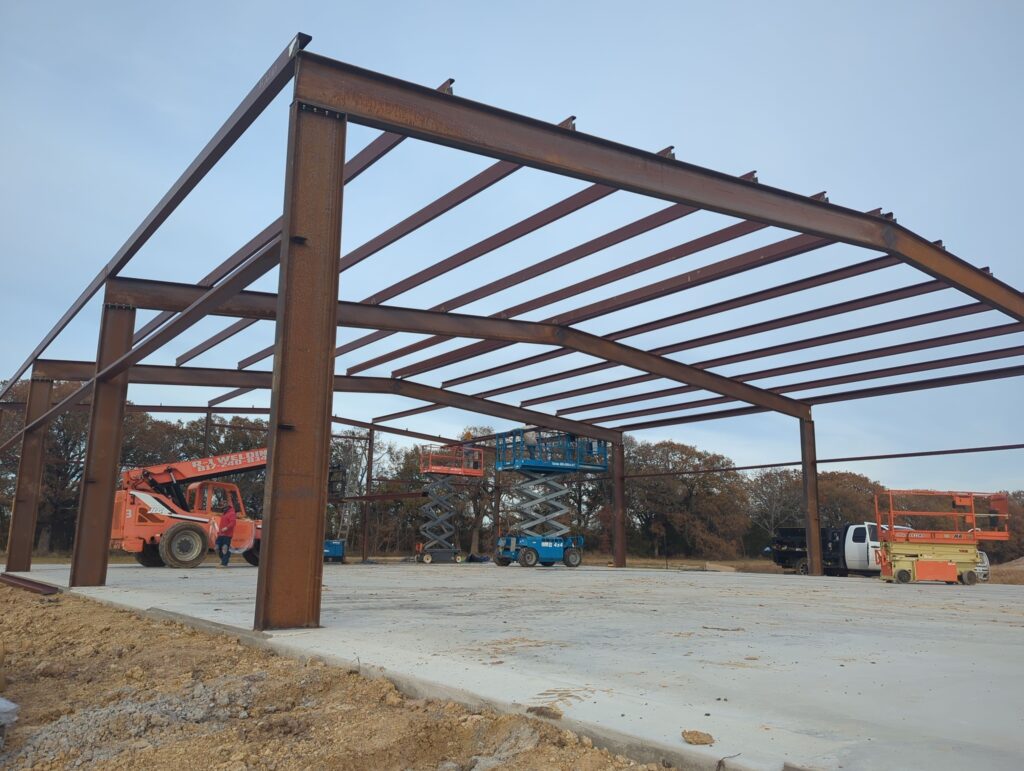
With a prepared foundation and an experienced crew, a 40×60 steel building goes up fast. Three to seven days is realistic for the frame, roof panels, and wall panels.
Day one is typically anchor bolt inspection, column setting, and primary frame erection.
Days two and three complete the primary frame and begin secondary framing — purlins and girts. Roof panels go on next, then wall panels, then trim.
A few things determine whether erection takes three days or seven.
Crew experience matters most. A crew that has erected dozens of pre-engineered buildings moves differently than one doing it for the first time.
Weather matters too — wind stops work faster than rain does. And the completeness of the kit matters. Missing or damaged components, which happen occasionally, can stall a crew for a day or more while the supplier ships replacements.
The erection phase looks fast from the outside. It is. But it only looks easy when it’s been done correctly many times before.
Weeks 8–12: Rough-In and Systems
This is the longest phase and the most variable.
A basic 40×60 shop with a single electrical panel, no plumbing, and blanket insulation can move through this phase in two to three weeks.
A building with spray foam insulation, a conditioned office, a restroom, HVAC, and upgraded electrical might take six to eight weeks — or longer if trades are booked.
Work in this phase typically runs in this sequence:
Insulation goes in first. Spray foam is applied to the roof deck and walls before any interior framing begins. Blanket insulation is installed during or just after erection.
Rough electrical follows — panel setting, conduit runs, circuit rough-in. This needs to be inspected before walls close.
Plumbing rough-in if the building has a restroom or utility sink. Inspected before slab work is covered or walls close.
HVAC rough-in — equipment placement, ductwork, linesets for mini-splits.
Interior framing for any finished spaces — office walls, restroom enclosure.
Drywall, insulation batt in framed walls, taping, and finish work.
Each of these trades has its own inspection requirements and its own scheduling constraints. The sequencing matters. Getting the order wrong means tearing something out and doing it again.
Weeks 13–20: Final Inspections and Certificate of Occupancy
Final inspections cover structural, electrical, plumbing, and mechanical. The order depends on the jurisdiction and the building’s scope.
For a basic storage building with only electrical, the final inspection might be a single visit.
For a commercial occupancy — such as a contractor shop with employees, a small business, or any building with public access — the inspection process is more involved.
Plan for two to four weeks between the end of finish work and the certificate of occupancy.
Some projects close faster. Projects with incomplete punch lists, outstanding inspections, or corrections required by the inspector take longer.
The certificate of occupancy is the finish line. It’s also the moment that some buyers, focused on the steel erection back in week seven, are surprised to find still three or four weeks away.
What Causes Projects to Run Long
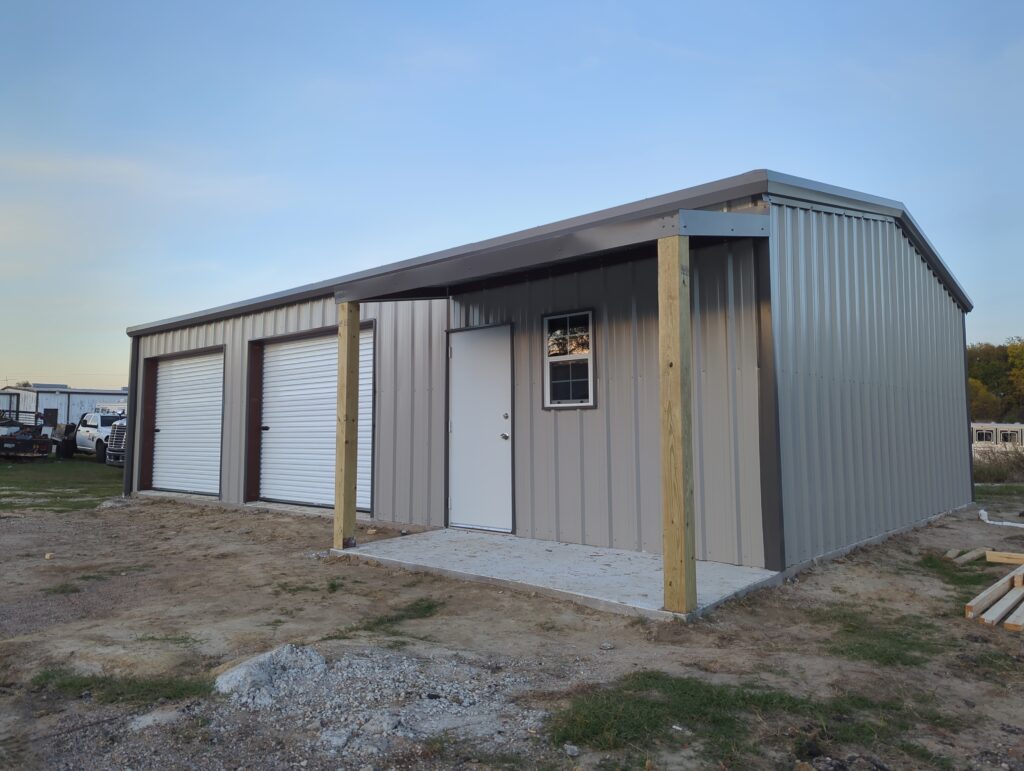
Permit delays. In some East Texas counties, permit processing takes longer than the site work itself. Apply early.
Subcontractor scheduling. A concrete crew that’s booked two weeks out, an electrician who can’t start until the following month — these gaps stack up. The buyers who move fastest are the ones who had trades lined up before they broke ground.
Weather. A rainy spring in East Texas can delay site work, foundation pours, and erection. Build a weather contingency into your timeline, not your optimism.
Kit lead time surprises. If the supplier is backlogged or a component ships damaged, erection waits. Order early and confirm lead times before you schedule your concrete.
Scope changes. Adding a restroom after the slab is poured. Deciding to condition the space after the insulation is already in. Every mid-project change costs more than the same decision made upfront — in money, in time, and sometimes in rework.
The Short Version
Plan for fourteen to eighteen weeks on a complete project with a finished interior. Expect ten to twelve for a basic shell with minimal systems. Add time if your site needs significant work, your county’s permitting is slow, or your trades are booked.
The projects that finish on time aren’t the lucky ones. They’re the planned ones.
Weather or supply delays can shift things, but good planning keeps your project on track.
When Hiring a Design-Build Contractor Makes Sense
Most people buying a 40×60 steel building kit are capable. That’s the whole point. They don’t need hand-holding. They need a building.
But there are situations where bringing in a contractor saves money in the long run.
Your timeline is tight.
Coordinating site work, foundation, erection, and trades is a sequencing problem. One subcontractor slips and the whole job stacks. A contractor who manages that sequence keeps your carrying costs from compounding.
Your site is complicated.
Wet areas, fill soil, significant slope, or drainage issues add real risk to a self-managed project. Getting the foundation wrong on a 40×60 costs more to correct than it cost to build. A contractor who works East Texas soil regularly has already seen your problem.
You want more than the standard box.
The moment you start adding conditioned space, a mezzanine, an integrated office, or a vestibule, you’ve moved past kit territory. That’s a design conversation.
Not sure whether a kit or custom build fits your project?
Long-Term Maintenance Tips
Metal lasts decades if you stay on top of a few things. Check seals around doors and windows every spring. Touch up any scratches to prevent rust. Clean gutters so water does not pool.
Insulated buildings need annual HVAC filter changes. We offer maintenance plans that keep everything running smoothly.
Common Mistakes and How to Avoid Them
Buyers compare kit prices and forget the rest of the job. They skip the soil test. They order before checking setbacks or utilities. They assume it will stay cool without insulation.
We catch those issues early, so your project stays on budget and on schedule.
Step-by-Step: How to Get It Right
- Define your daily use.
- Test the soil on your property.
- Decide kit or custom.
- Pull permits early.
- Prep the site.
- Pour the foundation.
- Erect the steel.
- Add systems and finishes.
- Final inspection.
We manage every step for clients who want one point of contact.
FAQ: 40×60 Steel Building
How much does a 40×60 steel building cost?
Most kits run $24,000 to $45,000, depending on gauge, eave height, and door packages. A complete, finished building on your East Texas property — site work, foundation, erection, insulation, basic electrical — will run $75,000 to $170,000 or more. Site conditions are the biggest variable in that range.
Can I build a 40×60 steel building myself in Texas?
Texas allows owner-builder construction. You don’t need a licensed general contractor by law to build on your own land. Some lenders require one if you’re using a construction loan. Check with your lender before you assume. Electrical, mechanical, and plumbing trades require licensed contractors regardless.
Do I need a permit for a 40×60 steel building in East Texas?
Most counties require one for a structure this size. Requirements vary by county and municipality. Some require engineered drawings stamped by a Texas PE. Check with your county before you start site work.
What kind of foundation does a 40×60 steel building need?
Most go on a monolithic concrete slab. Thickness, rebar schedule, and anchor bolt placement depend on your soil conditions and building loads. East Texas clay soils often require post-tension slab design. A soil test is the right starting point.
What’s the best insulation for a 40×60 steel building?
For conditioned space, spray foam applied to the roof deck. It seals air infiltration and prevents condensation on the metal. For unconditioned storage, fiberglass blanket insulation is cost-effective. The right answer depends on how you’ll use the building.
How long does it take to build a 40×60 steel building?
Site work and foundation typically run two to six weeks depending on conditions. Erection of the steel frame takes three to seven days with an experienced crew. Finishing work adds time depending on scope. Ground-break to certificate of occupancy is typically ten to twenty weeks for a complete project.
Can I add a mezzanine to a 40×60 steel building?
Yes. A partial mezzanine fits the footprint well and adds meaningful square footage at a fraction of the per-foot cost of ground-level construction. The structure requires engineering and needs to be designed around the primary frame.
Can I add a mezzanine later?
Yes, but plan it before the kit arrives for best results.
What’s the difference between a kit and a custom steel-frame building?
A kit is pre-engineered to standard dimensions. It ships, and you or a contractor assembles it. A custom steel-frame building is designed from scratch for your specific site, program, and needs. A straightforward 40×60 shop is a kit application. Add a mezzanine, integrated office, vestibule, and conditioned space and you’re in custom territory.
Does Trinity Metalworks sell 40×60 steel building kits?
No. We’re a design-build contractor. We manage projects from site work through certificate of occupancy, and we build custom steel-frame structures when the standard kit isn’t enough. If you have a kit coming and need someone to run the build, or if you want something the kit can’t deliver, that’s the conversation to have with us.
What areas does Trinity Metalworks serve?
East Texas and the Waco-to-DFW corridor. Smith, Henderson, Navarro, Ellis, Van Zandt, Anderson, Freestone, Cherokee, and McLennan counties. Tyler, Athens, Corsicana, Waxahachie, Longview, and surrounding communities.
How many square feet is a 40×60 steel building?
2,400 square feet.
Is a 40×60 steel building big enough for a shop and office?
Often, yes. It depends on how much of the footprint stays open and how much the office takes. A 30/10 or 20/20 split is common. Both work. The layout needs to be decided before the slab is poured.
Is a 40×60 steel building a good size for a contractor shop?
Yes. It’s one of the most common sizes for working contractors. Enough room for tools, materials, light equipment, and a small office without stepping into a footprint that’s hard to justify.
Is a 40×60 steel building good for ranch use?
Yes. Many buyers use this size for covered work area, equipment storage, and protection from weather. Simple to build, easy to maintain, and sized for real ranch operations.
Can a 40×60 steel building include a restroom?
Yes. But that changes the plumbing rough-in, the utility plan, and the layout. It also affects the foundation design if floor drains are involved. Plan it before the slab, not after.
Can a 40×60 steel building be insulated and air-conditioned?
Yes. Many are. The insulation type and HVAC sizing depend on how the building will be used. Those decisions need to be made early — before the kit is ordered — because they affect the framing and the electrical service.
Does a 40×60 steel building need an engineered foundation?
It’s definitely the smart move, but it depends on the site, the soil, and the building use. In East Texas, where clay soil is common, engineered foundation design is often the right call. A soil test tells you what you’re actually working with.
What is the biggest mistake buyers make with a 40×60 steel building?
They price the shell and assume they’re close to the full project cost. The shell is one line item. Site work, foundation, erection, insulation, mechanical, electrical, and permitting are the rest of the job.
Can Trinity Metalworks help if I already bought a kit?
In the right situation, yes. Some buyers already have a building package and need help with site work, foundation, utility coordination, or construction management. If that describes your project, it’s worth a conversation.
How long does the whole job take?
Site work and slab: 2–6 weeks. Erection: 3–7 days. Full project: 10–20 weeks to occupancy.
What Every Buyer Should Do Before Ordering a 40×60 Steel Building
Ask yourself these questions first:
- What will this space actually be used for every day?
- What does my site need before concrete?
- Will I need water, septic, or heavy power?
- Who will coordinate all the trades?
Answer them early, and your project stays smooth.
Final Thoughts
The 40×60 steel building works for shops, contractors, ranchers, and small businesses because it gives real space without a massive budget.
But the kit is only the beginning.
Success lives in the site, the slab, the drainage, the utilities, and how you plan to use it once it stands.
At Trinity Metalworks, we specialize in pre-engineered metal buildings (PEMBs), barndominiums, and custom steel-frame homes right here in Kerens, Texas. Whether you already have a kit or want a complete turnkey solution, we manage the entire job from start to finish.
Give us a call. We will walk your property, run real numbers, and show you exactly what a finished project looks like on your land—no pressure, just honest advice from locals who have done this hundreds of times.
Ready to build something that actually works for you? Let’s talk.


