
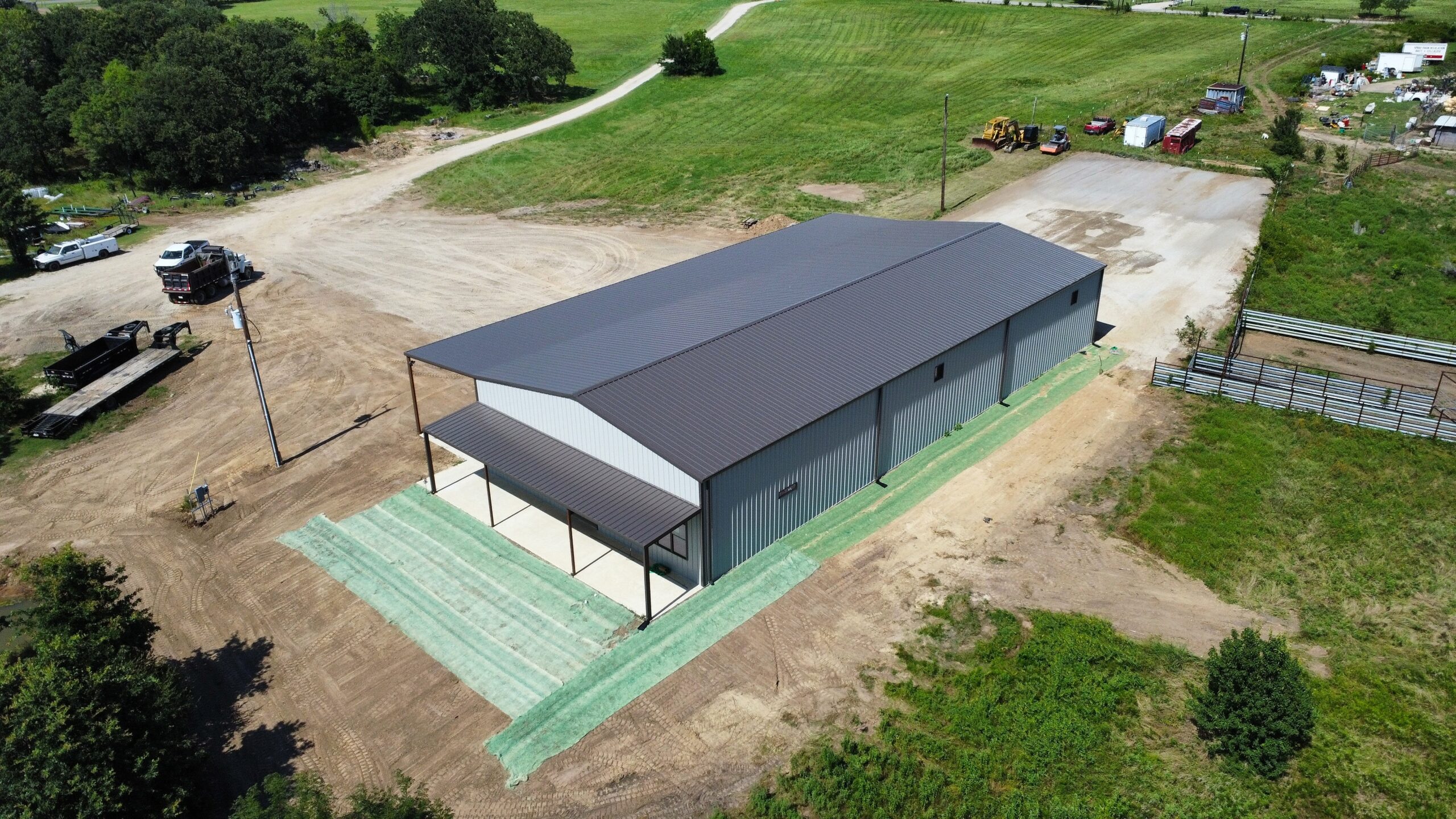
Pre-engineered metal buildings are one of the most cost-efficient ways to build income-producing commercial real estate in East Texas right now. The structural system is pre-engineered, the pricing is tighter, and the schedule is shorter than conventional methods.
And in commercial real estate, schedule is money. Every month you shave off construction is a month of debt carry you don’t pay and a month of rent you collect sooner.
This guide is for owner-operators who’ve run the numbers, like what they see, and want to know what actually drives a successful project in markets like Corsicana, Athens, and Waxahachie.
- Real costs.
- Real sequencing.
- Real expectations.
So, if you’re carrying land or close to pulling the trigger on a small bay industrial deal, keep reading. This article is for you.
Table of Contents
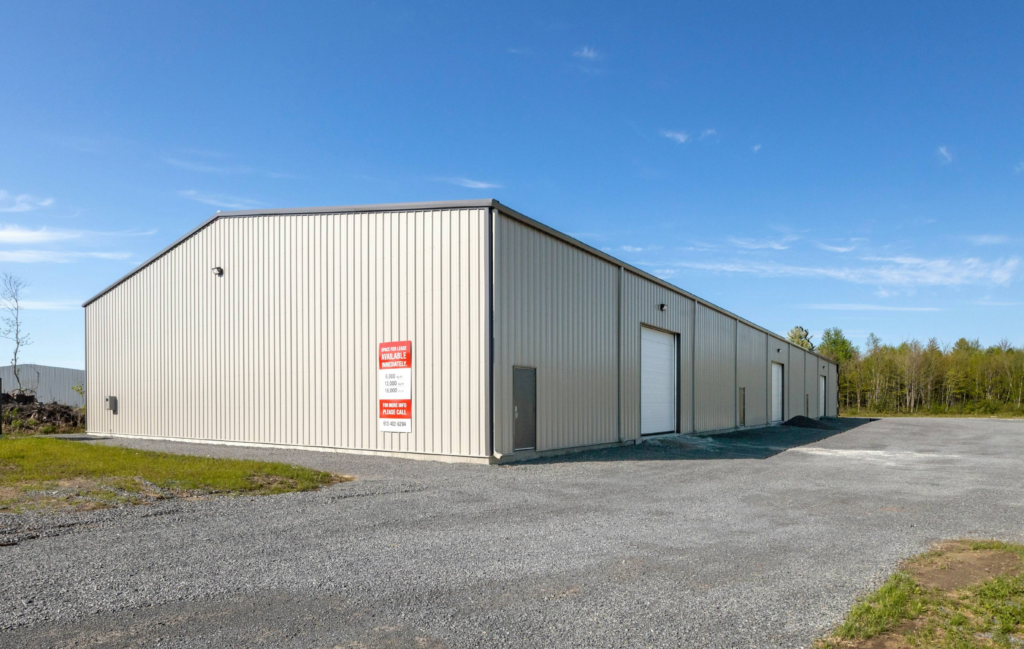
What “Pre-Engineered” Actually Means — (and What It Doesn’t)
Contractors throw the term around loosely. Here’s what’s actually happening in the market.
There are two distinct paths to a pre-engineered metal building. Most investors know that the path you choose matters — and it depends entirely on your site and your tenants.
Path one: The kit build.
Here’s how kits work.
- A national manufacturer engineers a standardized structural system.
- You select your dimensions, bay count, door locations, and clear height from a menu of proven configurations.
- The manufacturer fabricates the package — frames, panels, fasteners, trim — and ships it to your site via third-party freight.
- Your local builder assembles it.
This works well for straightforward sites with standard requirements. The engineering is proven. The lead times are predictable. The costs are defined early. For an investor building on flat, utility-served ground with tenants who need basic warehouse space, a kit build is a legitimate path.
What a kit build isn’t = Flexible.
If your site requires a complex drainage plan, has unusual soil conditions, or setback constraints that require non-standard framing, you’re pushing a standardized system past what it was designed for.
That’s where change orders live.…and your project often dies.
Path two: Custom design-build.
The Done-for-You option: Your second option is to hire a design-build firm — one that offers design, engineering, and construction under one roof — to develop your building from the ground up.
The structural system is engineered for your specific site conditions:
- Site constraints
- Wind and soil requirements
- Amenities and tenant specifications
- Accommodates your long-term expansion plans
- Components are fabricated according to those custom drawings, not pulled from a catalog.
The design-build path is a different animal.
Most projects that appear fully custom actually use modified pre-engineered systems — adapted so extensively they seem custom-designed, but maintaining the cost and timeline advantages of proven engineering approaches.
That’s the honest middle ground. You’re not throwing out the efficiency of pre-engineered construction. You’re applying it to a problem that’s actually yours, not a hypothetical average project.
When does custom design-build matter?
- Your site has drainage, grade, or soil conditions that a standard foundation package won’t accommodate
- Your anchor tenants have specific structural requirements — clear heights above 18 feet, mezzanine loads, drive-through bays, equipment foundations
- You want architectural differentiation — storefront treatments, facade systems, or roof pitches that make your project leasable to a broader tenant base
- You’re planning a phased development and need structural design that accounts for future expansion from day one
The honest answer on cost.
Kit builds typically carry lower upfront steel costs. Custom design-build carries more pre-construction investment. But when a kit system gets pushed into a site it wasn’t designed for, the gap closes fast.
Retrofit work, re-engineered connections, and field modifications are expensive.
Pre-construction is cheap. Discovering problems after the concrete is poured is not.
What the manufacturer sells. What the builder delivers.
This is true regardless of which path you take.
The manufacturer — whether that’s a national kit supplier or a regional fabricator working off custom drawings — sells engineered steel. The builder delivers a building.
- Foundations
- Erection sequence
- Weather sealing
- Coordination with mechanical and electrical trades
- Interior framing, mezanines, and amenities
- Finishes
— That’s the builder’s job.
Investors who get into trouble are usually the ones who conflated those two things. A low steel package bid is not a low construction cost. Vet your builder’s track record the same way you’d evaluate any commercial contractor. The steel is structural. So is the builder relationship.
Pre-construction is cheap.
Discovering problems after the concrete is poured isn’t.
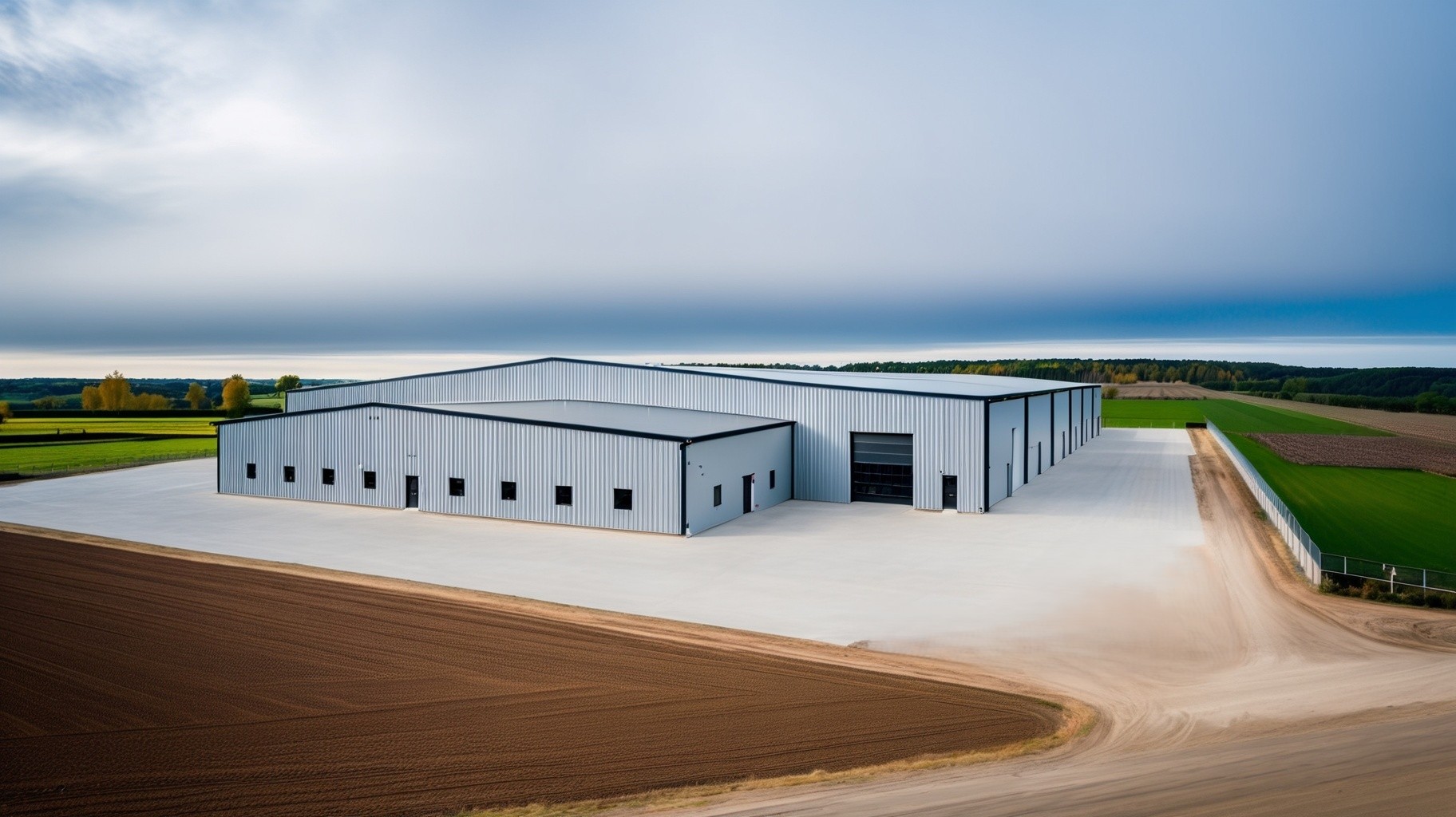
Why Pre-Engineered Metal Buildings Make Sense in East Texas
The structural system is engineered off-site. Steel components arrive fabricated and ready to bolt together.
- Less field cutting.
- Less improvisation.
- Fewer surprises.
Pre-engineered metal buildings are efficient by design — clear spans, optimized steel members, load calculations baked into the package before a single anchor bolt gets set.
For a submarket like Corsicana — close to I-45, within reach of Dallas, far enough out to stay affordable — that efficiency is the margin. Small bay vacancy stays tight across East Texas.
Deals that move fast lease fast. That’s not a coincidence.
That combination drives demand for small bay industrial. And pre-engineered metal buildings are designed for this asset class.
Pre-Engineered Metal Buildings Move Fast
Time kills returns. The faster you build, the faster you lease.
With pre-engineered metal buildings, the structure is engineered off-site. Steel components arrive ready to bolt together. Less cutting. Less field fabrication. Fewer surprises.
For a 10,000-square-foot flex project, this can shave months off compared to conventional builds. And months matter.
Pre-Engineered Metal Buildings Control Cost Per Square Foot
You probably say it in your sleep. “What’s the cost per foot?”
That’s your mantra.
Because pre-engineered-metal buildings are engineered systems, pricing tends to be tighter.
- Clear spans.
- Optimized steel members.
- Efficient foundations.
- Fewer change orders.
That means you’re not gambling. And that’s smart risk management, isn’t it?
The Math That Made You Google This
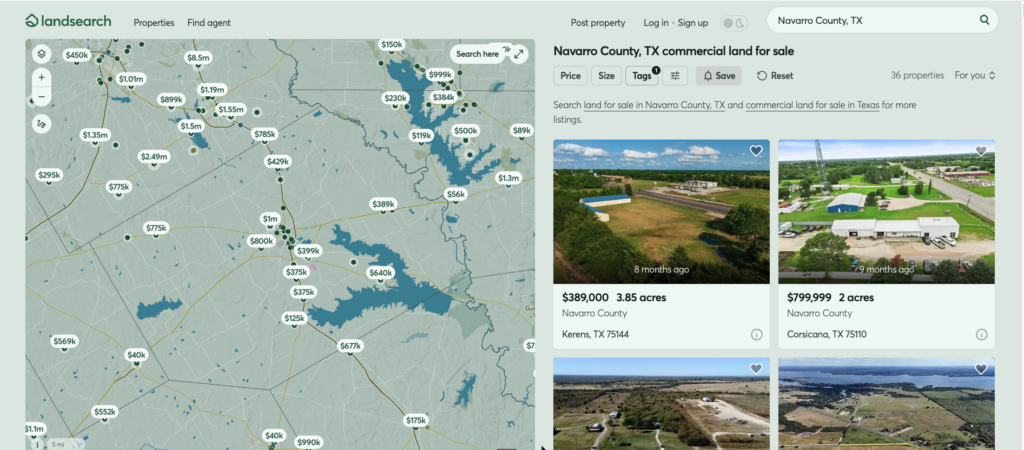
Land in Navarro County still pencils. That isn’t true everywhere anymore.
Commercially zoned ground in Navarro County is still available in the $1.50 to $3 per square foot range — a fraction of what you’d pay in DFW or Houston. That matters when you’re underwriting a 10,000-square-foot flex project, because your break-even depends on what you build — not just what you paid for the dirt.
The real play is small bay industrial:
- Three or four roll-up doors
- Divisible bays, 2,500 square feet each
- Front office, rear warehouse layout
- Triple net leases
It isn’t glamorous.
But it is predictable cash flow from tenants who need practical space and have zero interest in moving. The question is how to build it without destroying your returns in the process.
Understanding Small Bay Industrial Pre-Engineered Metal Buildings
Let’s define the play.
Small bay industrial means:
- Around 10,000 square feet
- Three or four roll-up doors
- Divisible units
- Front office, rear warehouse
- Triple net leases
This is not a million-square-foot Amazon box. It’s practical. Functional. High-demand space.
What Tenants Want from Pre-Engineered Metal Buildings
Tenants are simple. They want:
- 14’–16’ clear height
- 12’ x 14’ overhead doors
- Storefront glass
- Clean parking
- Reliable utilities
Pre-engineered metal buildings offer wide, clear spans. That means no interior columns getting in the way. You can divide into 2,500-square-foot bays. Or combine units later.
Flexibility increases leasing speed.
Why Pre-Engineered Metal Buildings Fit NNN Leases
Triple net leases shift maintenance and taxes to tenants. That only works when maintenance is predictable.
Steel-frame pre-engineered-metal buildings resist rot. They don’t attract termites. They hold up in Texas heat. Roof systems can last decades with proper coatings.
Low headaches. Stable NOI.
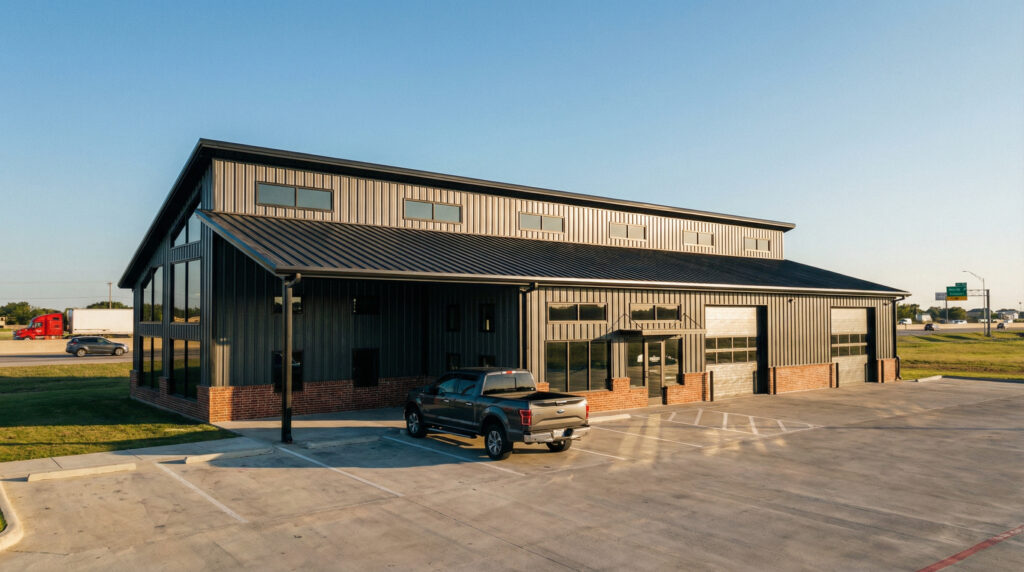
Cost Breakdown for Pre-Engineered Metal Buildings in East Texas
Let’s talk real numbers.
Shell Pricing for Pre-Engineered-Metal-Buildings
For a 10,000-square-foot shell in Corsicana, including:
- Steel frame
- Slab foundation
- Insulated roof and wall panels
- Overhead doors
- Basic storefront
You’re often looking at $70–$85 per square foot, depending on steel pricing and specifications.
This is the structural shell in a rural East Texas submarket. It doesn’t include HVAC, electrical, interior finishes, or tenant build-out.
That range moves based on current steel pricing, clear height specification, and wind load requirements for your specific county. Higher clear heights cost more steel. Heavier wind-load requirements require more steel. Neither should be a surprise.
Even at the top of that range, pre-engineered metal buildings stay competitive with tilt-wall and conventional wood-frame alternatives in this market. The structural efficiency is real and measurable..
The Site Work Factor
Here’s where new investors get surprised.
Clearing, grading, underground utilities, detention, asphalt, striping — add $8 to $20 per square foot. Now, you’ve got a more honest all-in number. That swing is real, and it’s driven entirely by your specific site conditions.
East Texas clay soil is unforgiving. Drainage issues that looked minor on a satellite map become expensive civil engineering problems once you break ground. Utility extensions in rural submarkets can add significant cost before you’ve placed a single anchor bolt.
Bad land math doesn’t improve with efficient steel framing. Run real budgets early. Not estimates. Not guesses. If you’re uncertain about site work, hire a civil engineer before you close on the land.
That fee is cheap compared to what you’ll spend if you find out the hard way.
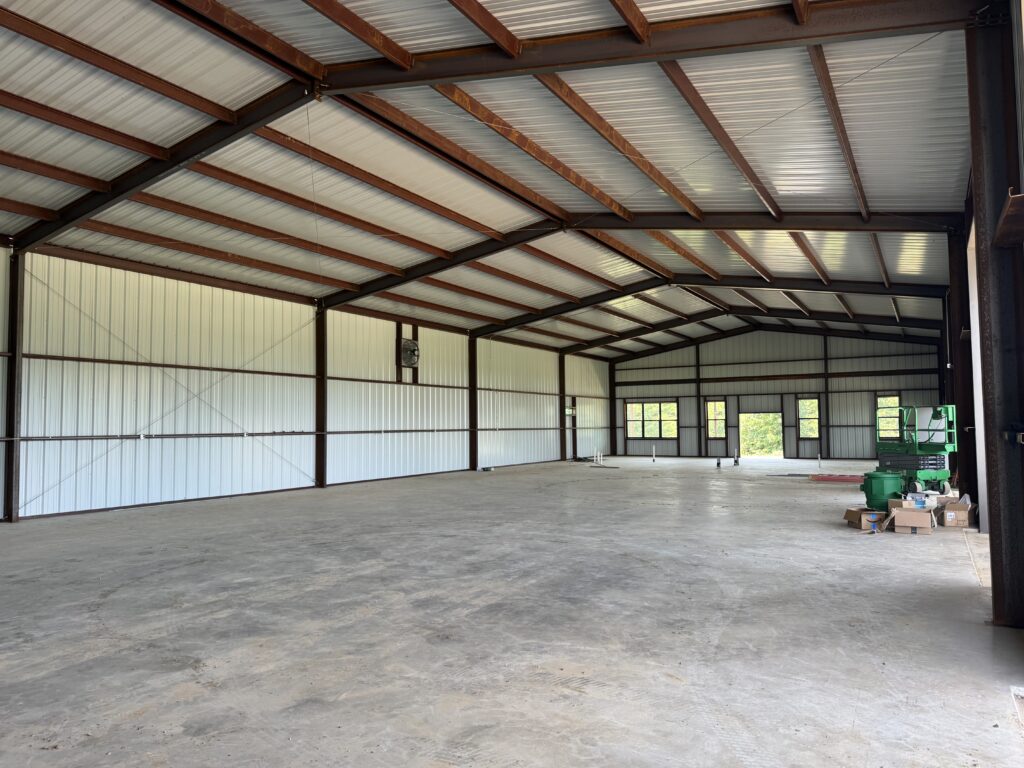
Designing Pre-Engineered Metal Buildings the Right Way
You may understand cap rates. But pre-construction? That’s new territory.
Step 1: Pre-Construction Planning
Before ordering steel, define:
- Bay sizes
- Door locations
- Clear height
- Office build-outs
- Electrical loads
- Drainage strategy
In Corsicana, ETJ requirements and Navarro County regulations matter. Soil conditions matter. East Texas clay isn’t forgiving.
Pre-engineered-metal-buildings require precise coordination between structural steel and foundation design. Anchor bolts must align. Slab elevations must match.
Mistakes here cost real money.
Step 2: Engineering and PEMB Coordination
PEMB stands for pre-engineered metal building. The manufacturer engineers the steel. The builder coordinates foundations and erection.
When done right, pre-engineered metal buildings go up clean and square. When done wrong, you’re cutting concrete and re-drilling anchor bolts.
Choose experienced teams.
What’s a realistic timeline for a 10,000-square-foot small bay project?
Pre-construction — 3 to 6 weeks.
Bay sizes, door locations, clear heights, office layouts, electrical loads, and drainage strategy are all defined here — before anything is ordered. This is the cheapest money you’ll spend on the project.
Engineering and permitting — 4 to 8 weeks.
These overlap with pre-construction where possible. Navarro County ETJ requirements and local code requirements need to be addressed before steel gets ordered.
Steel fabrication — 6 to 10 weeks from order.
Lead times are not negotiable. Order late, and you’re paying for an idle job site.
Site work — variable, runs concurrently with fabrication.
Smart scheduling overlaps site prep with steel lead time. This is one of the main ways a good builder saves you calendar weeks.
Steel erection and dry-in — 4 to 6 weeks.
Once the structure arrives, the erection moves fast. Weather sealing follows.
Total: five to eight months from kickoff to certificate of occupancy. When you’re carrying land and construction debt, every month matters.
What Tenants Want from Pre-Engineered Metal Buildings
Tenants are practical people. They’re not shopping for architecture.
- They want 14 to 16 feet of clear height.
- They want 12-by-14 overhead doors.
- They want storefront glass and clean parking.
- They want utilities that work.
Clear-span construction delivers on most of that list — no interior columns mean tenants can configure their space however their operations require.
You can split 10,000 square feet into four 2,500-square-foot bays. You can combine them later if a single tenant wants the whole building. Flexibility speeds lease-up. Lease-up determines your returns. Design for both.
Pre-Engineered Metal Buildings and the Triple Net Lease
Triple net leases shift maintenance and operating costs to tenants. That model only works when the underlying asset is actually low-maintenance.
Steel-frame construction resists moisture damage, termites, and structural warping. Proper roof coating systems last for decades. With routine maintenance, these buildings last 40 to 60 years. Some installations in Texas are well past that mark. For long-term technical performance standards, the American Institute of Steel Construction publishes detailed guidance worth knowing if you plan to hold.
Predictable maintenance means stable NOI. Stable NOI is what you’re actually buying. The steel is just how you get there.
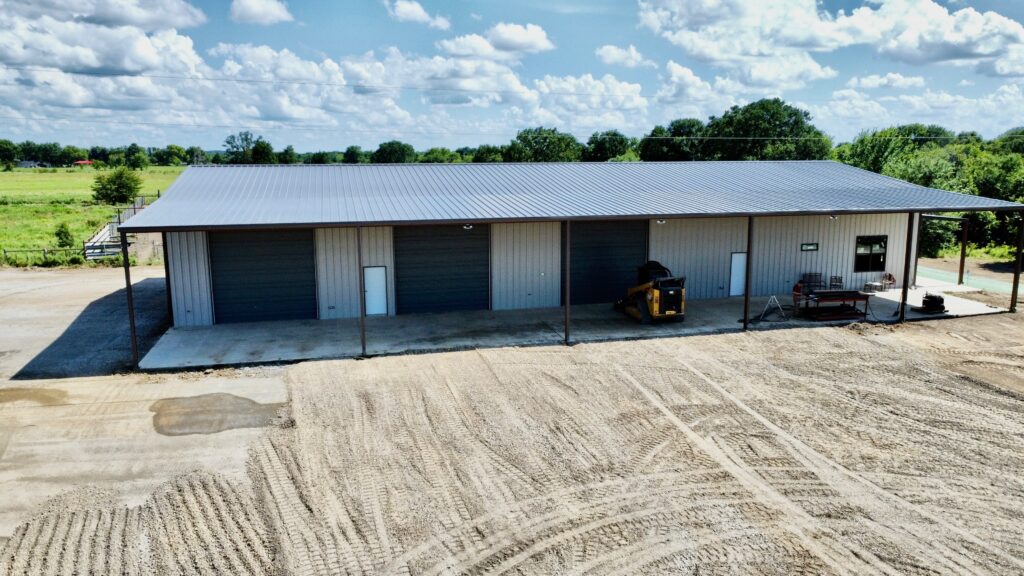
Common Questions About Pre-Engineered Metal Buildings
How long do they last?
With proper coatings and routine maintenance, a minimum of 40 to 60 years. Some older Texas installations exceed that significantly.
Can they be insulated?
Yes, and, in fact, it’s not optional in a Texas summer. Batt insulation, rigid board, and spray foam systems all integrate directly with the panel system. Tenants will expect it.
Are pre-engineered metal buildings customizable?
Yes. More than most people expect.
- Bay widths
- Clear heights
- Facade treatments
- Storefront systems, and
- Window placement can all be specified for your project.
These are engineered buildings, not catalog products.
What about future expansion?
Plan for it structurally, and it’s straightforward. Metal building end walls can be designed to allow future additions with minimal disruption. Ignore it during the design phase, and it’ll be expensive and disruptive later.
Do they work for triple net leases?
Yes! They’re well-suited for it. Low structural maintenance, durable finishes, predictable performance over a long hold.
Mistakes Worth Avoiding
Treating the building package like a turnkey project.
The package is engineered steel. Foundations, erection, weather sealing, and job site coordination are the builder’s responsibility. Don’t confuse a low steel package bid with a low construction cost.
Underestimating utility costs.
If water and sewer aren’t already adjacent to your site, you’re paying to extend them. Get hard numbers from utility providers before you underwrite. Not after.
Skipping expansion planning.
If there’s any chance you’ll add square footage in five years, design the end walls for it now. Retrofitting that capability after the fact costs far more than planning for it up front.
Skipping pre-construction entirely.
Every question you don’t answer before you break ground gets answered at full field labor rates after you break ground. Pre-construction is the cheapest phase of the job.
Financing: What Lenders Actually Want to See
Lenders understand investments. They understand metal building projects. They’ve seen them close. They know what they’re looking at.
What they want is a tight scope and honest numbers. Clear construction documents. Defined specifications. A builder with a documented track record. Ambiguity is the enemy of a construction loan.
Owner-operators typically use local community banks with commercial construction experience, conventional commercial construction loans, or SBA 504 programs when the project includes owner-occupied space.
What kills deals at the underwriting table isn’t the loan product.
It’s vague budgets and underspecified scopes. Give lenders detail and they’ll work with you. Give them assumptions, and they’ll move on.
What You’re Really Buying
You’re not in the metal building business.
You’re in the income property business. The steel is a means to an end. The end is a stabilized asset producing predictable cash flow in a submarket with real demand and tight supply.
Corsicana has that. Parts of Athens. Waxahachie. The East Texas corridor, as far south as Huntsville, is chock-full of opportunities.
The investors who succeed here aren’t the most sophisticated people in the room. They’re the most prepared. They do the pre-construction work. They hire builders who understand the asset class. They run honest budgets before they fall in love with a piece of dirt.
And somewhere along the way, they stop thinking about what they’re building.
They start thinking about what they’re buying.
That’s the whole game.
Trinity Metalworks designs and builds custom steel-frame commercial and residential structures across East Texas. If you’re evaluating a project in Corsicana, Athens, or the surrounding area, contact us here to start a conversation.


